Interior Design for Home Renovations: The Step-by-Step Process That Prevents Expensive Changes

Why Renovation Success Begins Before Construction
A successful home renovation is shaped long before construction begins. While finishes, furnishings, and visual direction are important, the decisions that most often protect a project happen earlier: clarifying the scope, resolving layouts, understanding how one room connects to another, and coordinating design decisions before they become costly construction changes.
For homeowners planning a major renovation or new construction, interior design is not simply the final layer of the project. It is the discipline that turns personal priorities, daily routines, and long-term goals into architectural, functional, and material decisions that can be clearly planned, priced, and built. A well-developed design process helps define where layout changes may be needed, how cabinetry, lighting, materials, and furnishings work together, and what decisions should be made before a builder is pricing or building from incomplete information — which can otherwise lead to mid-stream changes that are costly in both budget and timeline.
For homeowners still in the early planning stage, our guide to common renovation mistakes in Fairfield and Westchester homes explains the decisions that are easiest to overlook before construction begins.
This guide walks through the key phases of a renovation design process, from the first consultation through final installation, with a focus on the planning decisions that help prevent expensive revisions, rushed selections, and disconnected results.
Phase 1: Clarifying Scope, Priorities, and the Existing Home
The first phase of a renovation is not about rushing into finishes or collecting more inspiration images. It is about understanding the project clearly enough to identify what kind of design work, professional input, budget, and timeline may be required.
During early-phase consultations and site visits, the design team begins to assess the existing home, the homeowner’s priorities, and the level of change being considered. Is the renovation primarily cosmetic, or will it involve layout revisions, cabinetry, lighting, plumbing, structural considerations, or coordination with a builder, architect, engineer, or trade professional? Are the updates limited to one room, or will they affect how several areas connect?
This early clarity matters because the existing home often determines what is realistic, what needs further investigation, and what may require specialized review. For example, older plumbing lines may not always support modern fixtures without additional work. A floor structure may need to be evaluated before planning a new soaking tub. In some cases, a full understanding of existing conditions cannot be achieved through a visual walk-through alone; limited invasive investigation by the appropriate professional may be needed before scope, budget, or construction plans can be finalized.
A thoughtful first phase helps reveal what the project actually requires before assumptions become commitments. It also gives homeowners a more realistic understanding of the path ahead: who should be involved, what decisions need to be made early, and where additional planning may prevent avoidable changes later.
Phase 2: Defining Scope, Budget, and the Right Project Team
Once the existing home and overall project goals are better understood, the next step is to define the design scope with more precision. This is where the project begins to move from a general idea — “we want to renovate the kitchen,” “we need to update several bathrooms,” or “we want the whole home to feel more cohesive” — into a clearer understanding of what the work may actually involve.
At this stage, the design team helps identify which areas are included, what level of documentation may be needed, and which decisions should be made before pricing, construction, or procurement begins. A renovation that involves cabinetry, lighting, plumbing, millwork, furnishings, or architectural adjustments requires a different level of planning than a simple decorative refresh. Defining that scope early helps homeowners understand the difference between what they hope to accomplish and what the project may require to achieve it well.
Budget should also be discussed with the full project in mind. Construction is only one part of the investment. Depending on the scope, the budget may also need to account for professional fees, product costs, freight and receiving, delivery logistics, on-site storage, and contingency. Contractor allowances can be useful as placeholders, but they rarely provide a complete picture of what the homeowner will actually purchase. An allowance may not clarify the specific material, quantity, waste factor, freight, or related details needed to understand the real cost of a selection. Creating line-item budgets for key materials during the design process gives homeowners a clearer basis for decision-making and helps reduce the risk of the budget expanding after selections are made.
The right project team also matters, especially when homeowners are trying to understand the difference between an interior designer and architect during a renovation. Depending on the scope, a renovation may require an interior designer, architect, builder, engineer, landscape professional, or various trades. Clarifying who should be involved — and when — helps avoid duplicated effort, missing information, and late-stage revisions. The goal is not to overcomplicate the project. It is to make sure the right expertise is in place before important decisions are made from incomplete assumptions.
A well-defined scope, realistic budget framework, and properly assembled team give the renovation a stronger foundation. They also help the homeowner move into design development with a clearer sense of what is being planned, what needs to be investigated further, and what decisions will have the greatest effect on cost, timing, and outcome.
Phase 3: Developing the Design Direction, Layouts, and Material Decisions
With the scope, budget framework, and project team better defined, the design work can begin in a more focused way. This phase is where broad goals become a clearer design direction, supported by layouts, material concepts, and the decisions that will shape how the renovated areas function and relate to the rest of the home.
Inspiration images often become part of this conversation, and they can be very useful when they are studied in the right way. The goal is not to recreate a room from a photograph, but to understand what the homeowner is responding to. Is it the proportion of the cabinetry, the warmth of the wood, the way natural light moves through the room, the softness of the palette, the contrast between old and new, or the overall atmosphere? A good design team looks past the surface of an image and uses it to identify patterns, preferences, and priorities that can be translated into a home’s own architecture, scale, and daily use.
A clear design direction can make the next phases of renovation planning more focused. In our Vanderbilt House concept study, exploring several design directions early helped the client understand what felt aligned before moving into more detailed design and construction decisions.
For many homeowners, this is the first time the project begins to feel tangible. Plans, elevations, mood boards, millwork studies, lighting direction, material selections, and furniture layouts help translate ideas into something that can be reviewed, discussed, and refined. These tools are not just presentation pieces. They help the homeowner and design team evaluate proportion, circulation, storage, sightlines, transitions, and the relationship between rooms before construction begins.
This level of detail is especially important in renovations because one decision often affects several others. A floor plan may show where a room begins and ends, but it does not resolve every decision needed to build it well — especially when layout changes affect flow, furnishings, cabinetry, lighting, or construction details. Moving a doorway can change furniture placement. Appliance locations can affect cabinetry layout, lighting, electrical needs, plumbing, and storage. In a bathroom, the selection of wall sconces can affect junction box height, spacing from the medicine cabinet, mirror size, and tile layout. The more thoroughly these decisions are studied during design development, the less likely they are to become surprises during construction.
A well-developed design direction also helps homeowners make decisions with more confidence. When the layout, materials, lighting, cabinetry, and furnishings are considered together, the project is less likely to feel like a series of isolated choices. Instead, each decision supports the larger direction for the home, making it easier to move forward without second-guessing major elements halfway through the renovation.
A More Transparent Way to Look at Material Costs
Contractor allowances can be helpful as early placeholders, but they do not always reflect the actual materials, quantities, freight, receiving, or logistics required for a finished renovation.
As part of our design process, Luminosus Designs develops line-item budgets for key materials so homeowners can compare options with greater clarity before final selections are approved. This helps reduce budget surprises and gives the project team a more accurate understanding of how design decisions affect the overall investment.
A Floor Plan Is Not a Complete Design Package
A floor plan is an important starting point, but it does not show every decision needed to build a renovation well. Elevation drawings showing lighting locations, millwork details, tile patterns and locations, and coordination notes all help clarify what is actually being built.
The more complete the design documentation is, the less the project relies on assumptions. That clarity helps the homeowner, designer, builder, architect, and trades understand the same scope before construction begins.
At Luminosus Designs, this level of detail is routinely included in our drawing sets so design intent is communicated clearly before work begins.
Phase 4: Finalizing Design Details, Contractor Pricing, and Construction Readiness
Once the design direction has been developed, the next step is to refine the details so the project can move toward pricing and construction with greater clarity. This is where design intent becomes more specific: drawings are developed, selections are coordinated, dimensions are studied, and the relationships between materials, fixtures, millwork, lighting, and construction details are more carefully resolved.
This phase is important because incomplete information often leads to assumptions. A builder may be able to provide a general estimate from early drawings, but more accurate pricing usually depends on a clearer understanding of scope. Cabinetry details, appliance specifications, plumbing fixtures, lighting locations, tile layouts, stone selections, hardware, trim details, and finish direction can all affect labor, materials, lead times, and installation requirements. The more complete the design information is, the less room there is for misinterpretation between the homeowner, designer, builder, architect, and trades.
Contractor bid review is also an important part of this phase. Once pricing is received, the design team can help review whether the bids appear to reflect the intended scope, selections, drawings, and level of detail. This does not replace the contractor’s responsibility for pricing or construction means and methods, but it can help identify gaps, assumptions, exclusions, or inconsistencies before a homeowner makes a decision based on numbers that may not represent the same work.
This is also where 3D visualization can be especially valuable. Alongside plans, elevations, and material selections, visual studies can help clients better understand how the finished rooms may look and feel before construction starts. That clarity supports more confident decisions and helps reduce the likelihood of late-stage design changes.
Even with careful planning, renovations can still uncover conditions that are not visible at the beginning of the project. Older homes may reveal framing issues, aging plumbing, electrical systems that need to be updated for current code requirements, or other site conditions such as rot once walls, floors, or ceilings are opened. A strong pre-construction process helps reduce avoidable changes, but it cannot eliminate every unknown. This is why a contingency allowance remains an important part of a responsible renovation budget.
By the end of this phase, the goal is not to make every project immune to change. Renovation always requires some flexibility. The goal is to reduce preventable changes by making sure the design has been clearly studied, documented, visualized, and coordinated before construction begins.
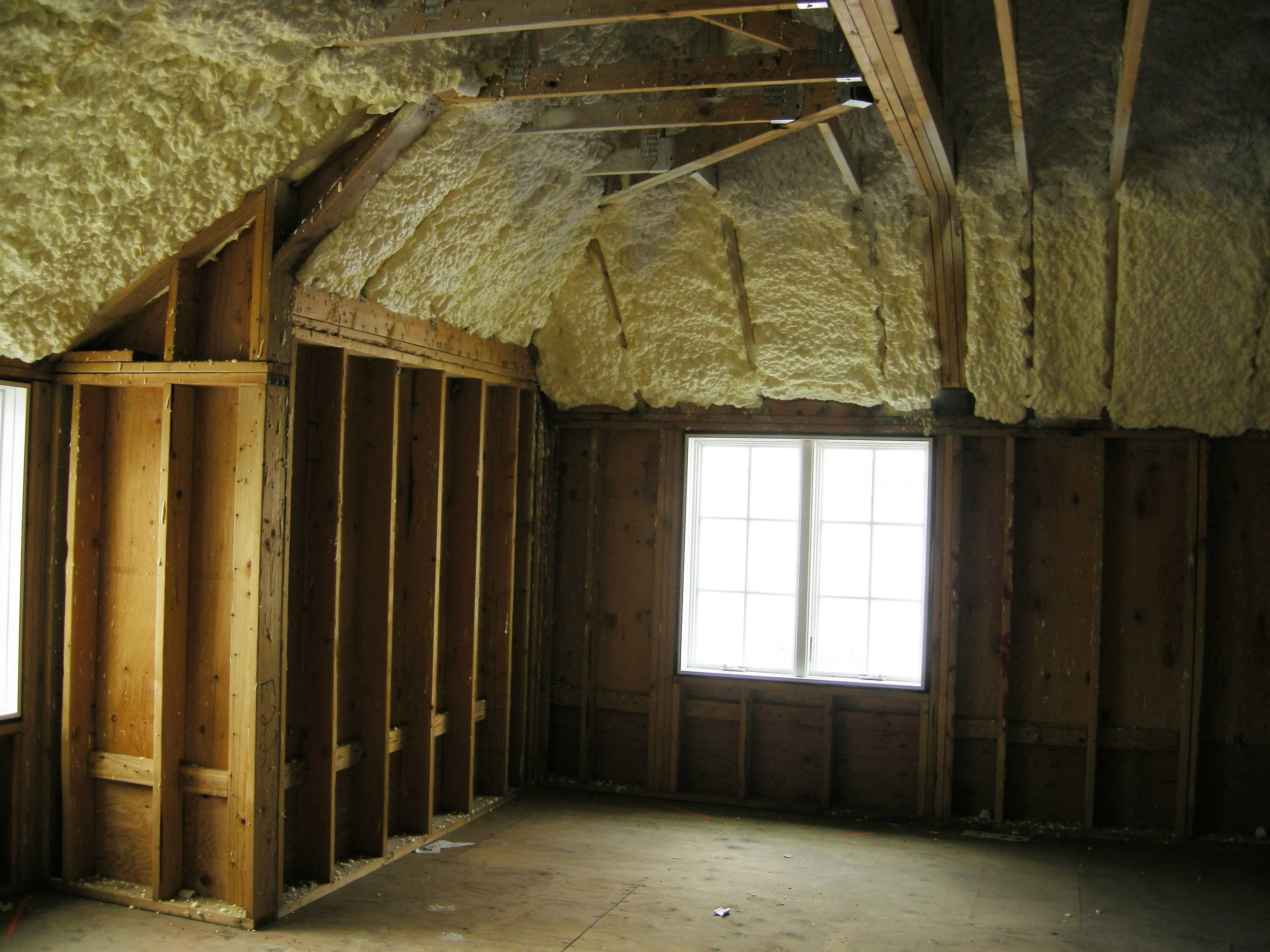
An unfinished room reveals how much happens before the final design is visible: framing, insulation, ceiling geometry, lighting coordination, and the planning required to turn construction into a finished interior.
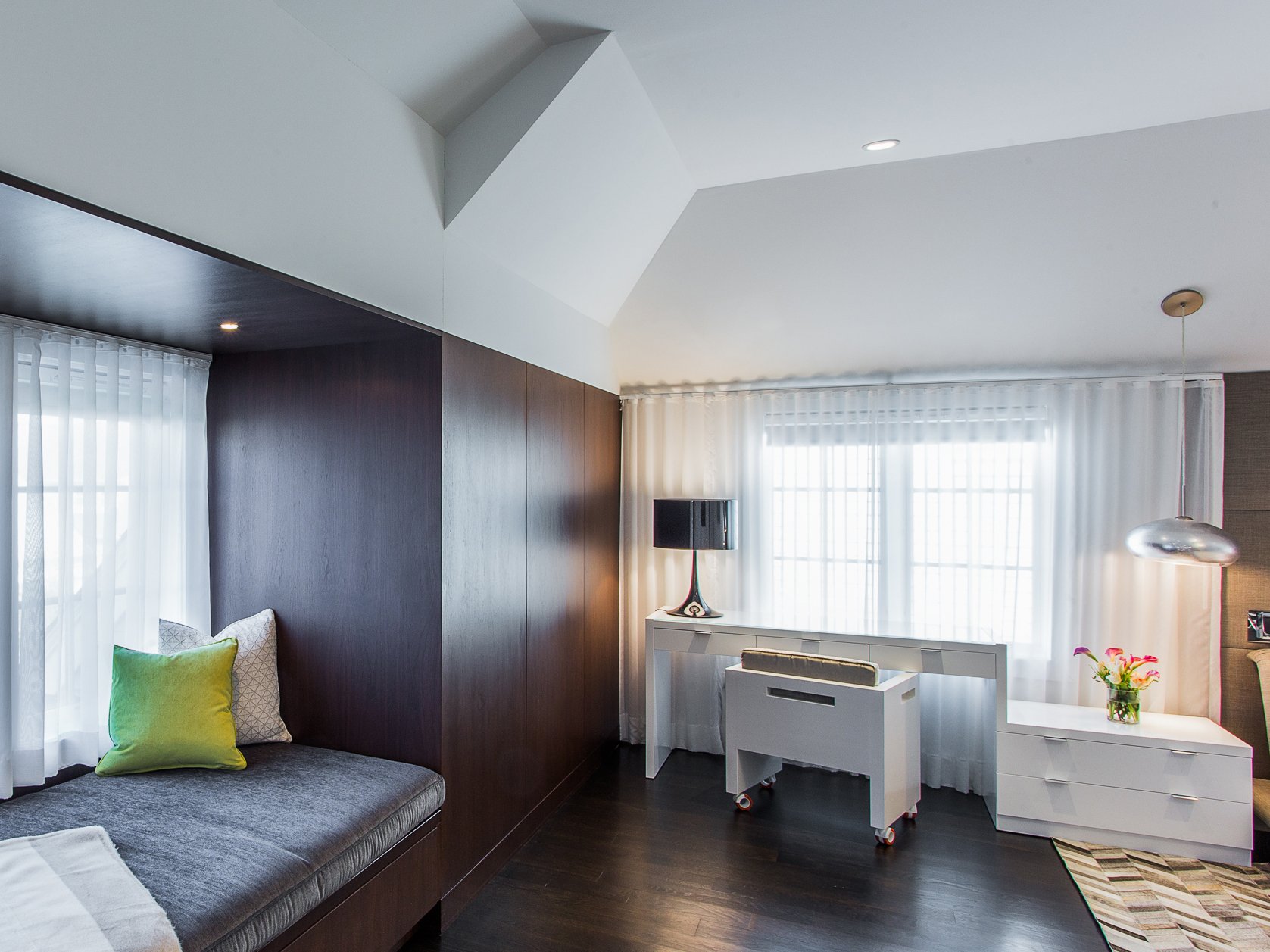
The finished room brings together millwork, lighting, window treatments, furnishings, and architectural details that had to be planned and coordinated long before installation. Careful design planning can also help awkward architectural elements feel intentional rather than compromised.
Phase 5: Managing Procurement, Lead Times, and Implementation
By the time a project reaches procurement, many of the material and product conversations have already begun. In a well-managed design process, preliminary pricing and line-item budget information are often reviewed earlier, before final selections are approved. This helps homeowners understand the cost implications of different options and make decisions with a clearer sense of how each choice affects the overall budget.
Once selections are approved, procurement becomes the process of turning design decisions into confirmed orders. This includes verifying specifications, obtaining updated quotes when needed, confirming quantities, reviewing acknowledgments, tracking lead times, coordinating freight and delivery, managing receiving, and addressing issues if items arrive damaged, delayed, discontinued, or different from what was expected.
Procurement also has a direct relationship to the construction schedule, especially in kitchen renovation planning where appliances, plumbing fixtures, lighting, tile, and hardware often need to be coordinated before certain phases of work can proceed. If critical items are missing, delayed, or not coordinated properly, the project may pause, require substitutions, or create additional labor and scheduling complications.
This is where the design team helps protect both the design intent and the practical flow of the project. Product availability, lead times, delivery logistics, and on-site storage all need to be considered in relation to the renovation timeline. The goal is not simply to purchase beautiful materials, but to make sure the right items are ordered accurately, arrive when they are needed, and can be installed according to the design plan.
Procurement Is More Than Placing Orders
Procurement is one of the least visible parts of a renovation, but it can have a major effect on timing and execution. Confirming specifications, reviewing acknowledgments, tracking lead times, coordinating freight, managing receiving, and resolving damaged or delayed items all require careful follow-through.
At Luminosus Designs, procurement is coordinated in relation to the construction calendar. We meet with contractors regularly to discuss schedule, site readiness, material delivery, and logistics so the right items arrive when they are needed and can be installed according to the design plan.
Phase 6: Completing the Installation and Final Details
As construction and major installation work come to a close, the final phase is about bringing the renovation into its finished state. This is where the larger design decisions are joined by the details that make the home feel complete: furnishings, window treatments, lighting adjustments, art, accessories, hardware, and the final layer of styling.
This phase is not only about appearance. It is also about resolution. The design team may review installed items, confirm that furnishings and materials have arrived as expected, coordinate final deliveries, and address any remaining details that need attention. In a renovation, even small adjustments can affect how the finished home feels and functions, from the height of a window treatment to the placement of a pendant, the scale of a rug, or the way a room transitions into the next.
A thoughtful completion phase also allows the project team to identify and resolve remaining punch-list items. These may include touch-ups, missing parts, damaged items, delayed products, or details that need to be corrected before the project is considered complete. While this stage can feel close to the finish line, it still benefits from organization, follow-through, and clear communication.
The goal is a home that feels complete, not simply renovated. When the earlier phases have been carefully planned, the final details can do what they are meant to do: support the architecture, reflect the homeowner’s priorities, and bring the project to a polished and cohesive conclusion.
Conclusion: A Better Renovation Begins With Better Planning
A major renovation is not simply a series of design choices. It is a sequence of connected decisions involving scope, budget, layout, materials, documentation, construction coordination, procurement, and final installation. When those decisions are made too late, or without enough information, the project becomes more vulnerable to misunderstandings, delays, budget increases, and changes during construction.
A strong interior design process helps bring those decisions into focus earlier. It allows the homeowner and project team to understand what is being planned, what needs further investigation, what should be priced before work begins, and how each decision affects the home as a whole.
The most successful renovations are not the ones where nothing changes. Renovation always requires some flexibility. The difference is that avoidable changes are reduced because the project has been studied, coordinated, and communicated before construction begins.
For homeowners planning a major renovation or new construction, early design planning is one of the most important ways to protect the investment. It creates a clearer path from initial ideas to finished home — with fewer assumptions, stronger coordination, and a more cohesive result. If you are still evaluating the right design partner, it is worth understanding how to choose an interior designer for a renovation before the project moves too far into planning, pricing, or construction.

Mimi Fong
Founder+Principal
White Plains, NY