Vanderbilt House Concept Study: How Design Directions Clarified a Modern Farmhouse Renovation
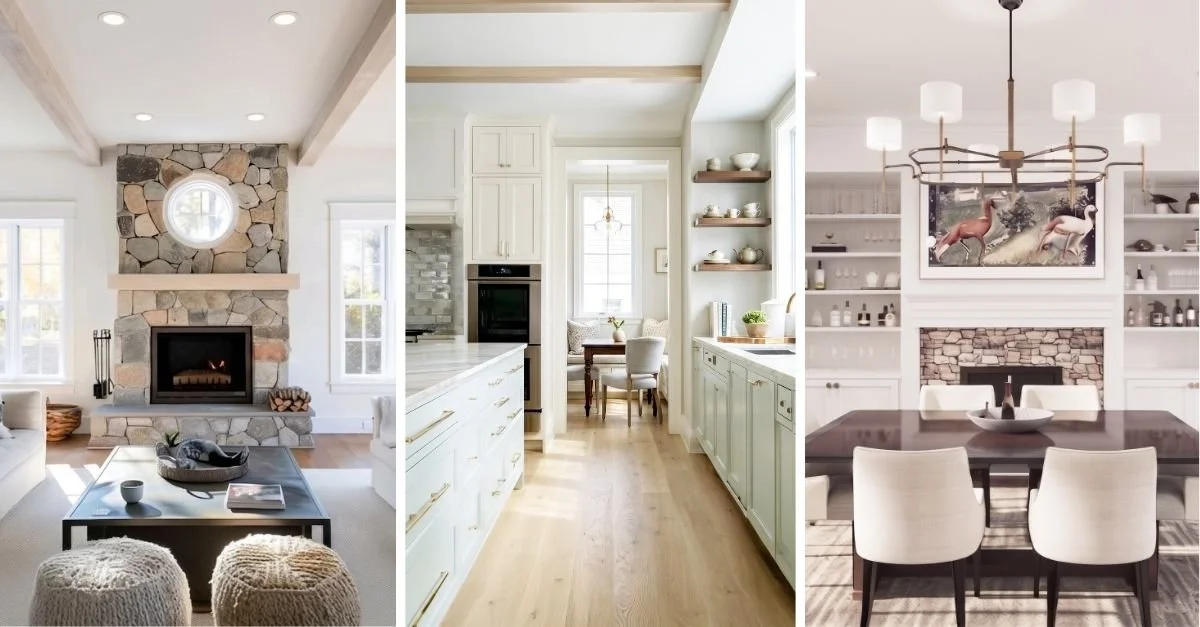
A successful renovation rarely begins with a single perfect idea. More often, it begins with a series of possibilities that need to be studied, compared, refined, and clarified before the project moves into drawings, selections, budgeting, and construction decisions.
That was the purpose of the Vanderbilt House concept study: to explore how one modern farmhouse renovation could take shape through three distinct design directions. Each concept interpreted the home differently, balancing warmth, coastal ease, architectural character, texture, and refinement in its own way.
At this early stage, the goal was not to finalize every detail. It was to help the client see what each direction could feel like, understand the differences between them, and begin making more confident decisions about the overall direction of the home.
For homeowners planning a major renovation, this kind of concept planning can be one of the most valuable early steps in the design process. Before materials are selected or construction decisions begin, a clear design direction helps align the larger vision, reduce confusion, and create a stronger foundation for the work ahead.
Project Context
The Vanderbilt House concept study began with a familiar design question: how can a modern farmhouse direction feel warm, current, and personal without becoming predictable?
The home had a clear architectural starting point, but the design direction needed refinement. The client was drawn to a modern farmhouse sensibility, with the softness and ease of coastal influence layered in. At the same time, existing conditions — including the color and character of the flooring — needed to be considered so the new direction would feel cohesive rather than disconnected from the home itself.
Rather than move too quickly into specific finishes or individual selections, we used the concept study to explore several possible paths. One direction was developed with the existing flooring and architectural conditions more directly in mind, while the others allowed us to study how the home might feel if the design direction were approached with fewer visual constraints.
The goal was to clarify the feeling of the home first: how warm or airy it should be, how much contrast it should carry, how relaxed or structured the interiors should feel, and how materials, color, and architectural details could work together before the design became more specific.
The Design Challenge
The challenge was not simply to make the home feel “modern farmhouse.” That phrase can point in many different directions, from rustic and casual to polished and architectural. Without further definition, it can easily become too broad to guide real decisions.
The concept study allowed us to test what the home could become before narrowing the direction. By developing three distinct interpretations, we could compare not only different looks, but different levels of warmth, contrast, softness, structure, and coastal influence.
This is where early planning becomes especially valuable. A concept study gives the client a way to respond to the overall feeling of the home before the project moves into more detailed decisions. Instead of choosing isolated finishes one at a time, the client can begin to understand which direction feels most aligned, which ideas should carry forward, and which ones may not belong.
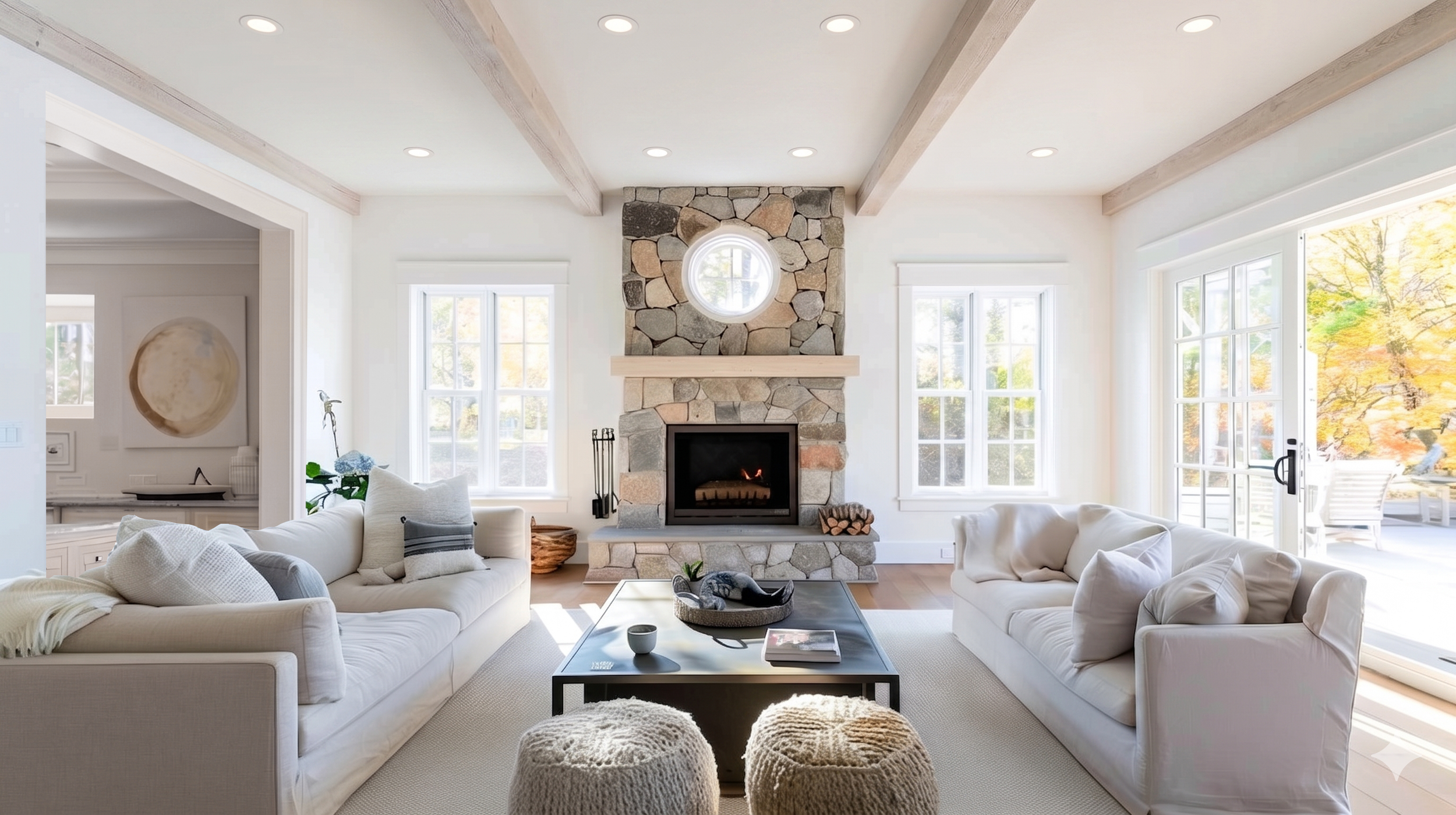
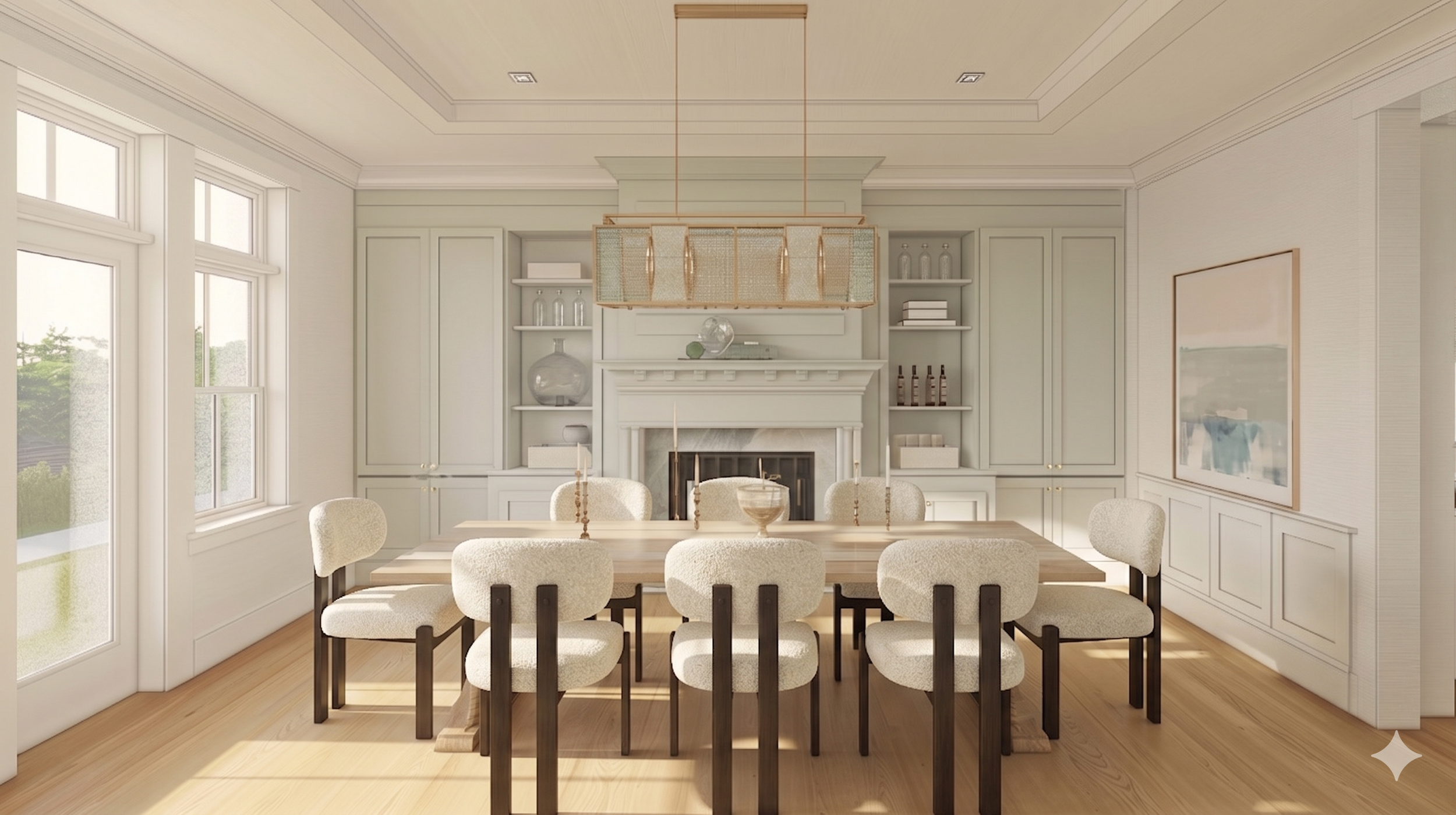
Concept One: Quiet Harvest
Quiet Harvest explored the warmest and most grounded interpretation of the home. This direction leaned into creamy neutrals, warm wood tones, soft contrast, and natural texture to create a calmer version of modern farmhouse design.
Rather than pushing the home toward a rustic look, this concept helped clarify how warmth could be introduced with restraint. The goal was a home that felt settled, comfortable, and quietly refined, while still leaving room for coastal ease and a lighter overall feeling.
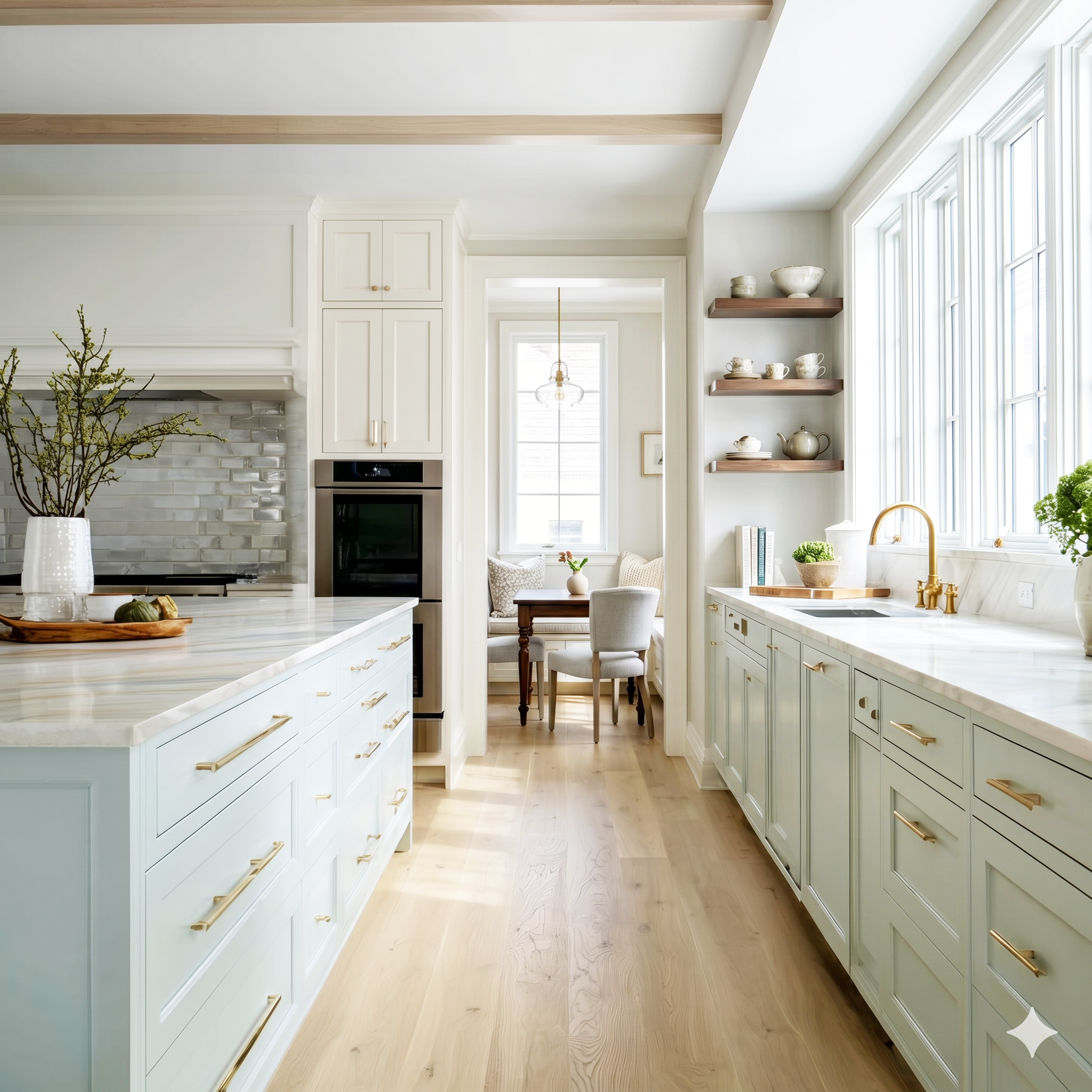
Concept Two: Salt Meadow
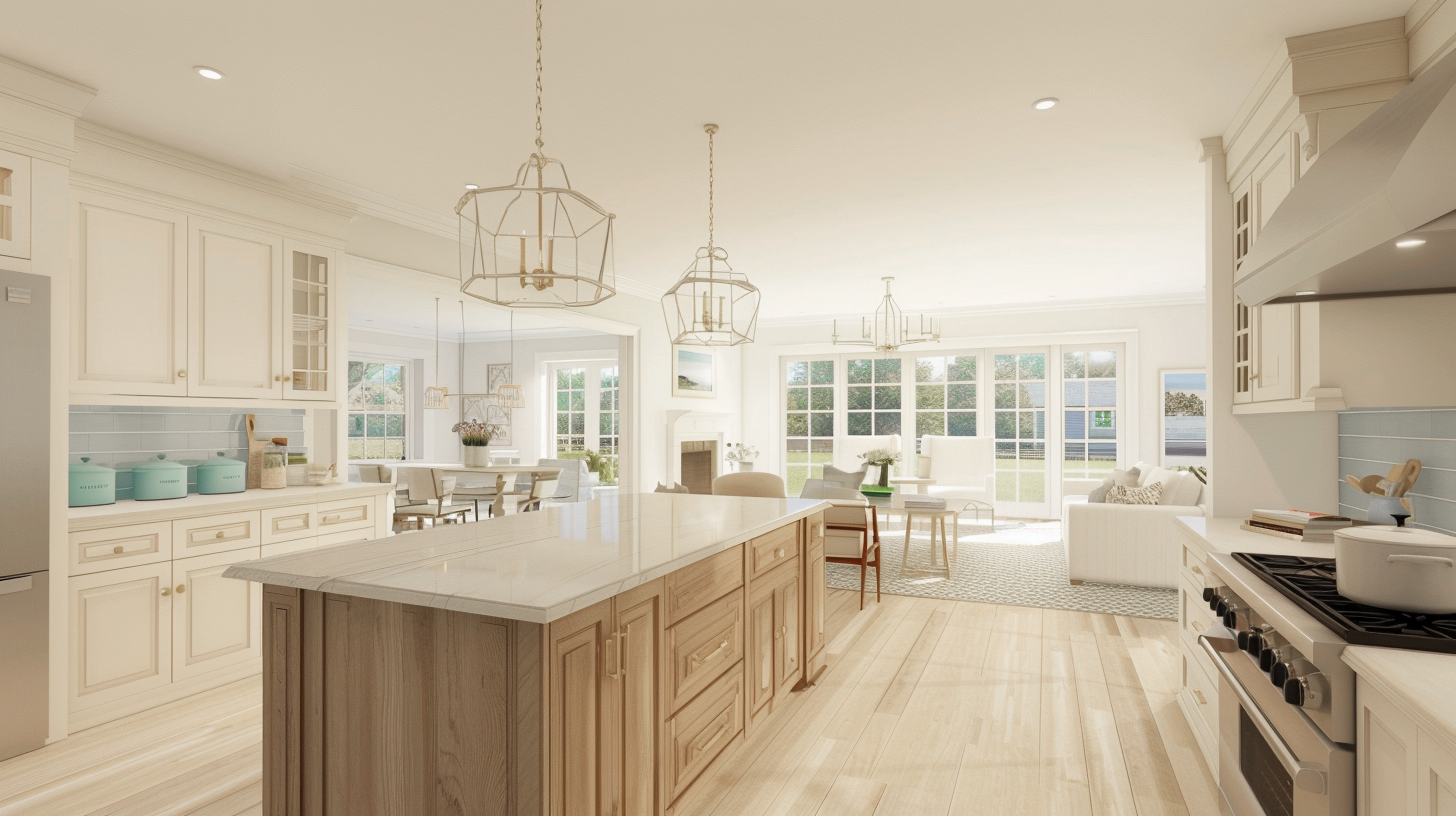
Salt Meadow explored the lightest and most coastal-influenced interpretation of the home. This direction softened the modern farmhouse foundation with pale woods, soft whites, woven textures, and a more relaxed sense of ease.
The purpose of this concept was to study how far the home could lean toward an airier, coastal feeling without becoming themed or overly casual. It helped clarify the role of lightness, texture, and restraint in creating a version of modern farmhouse that felt fresh, open, and refined.
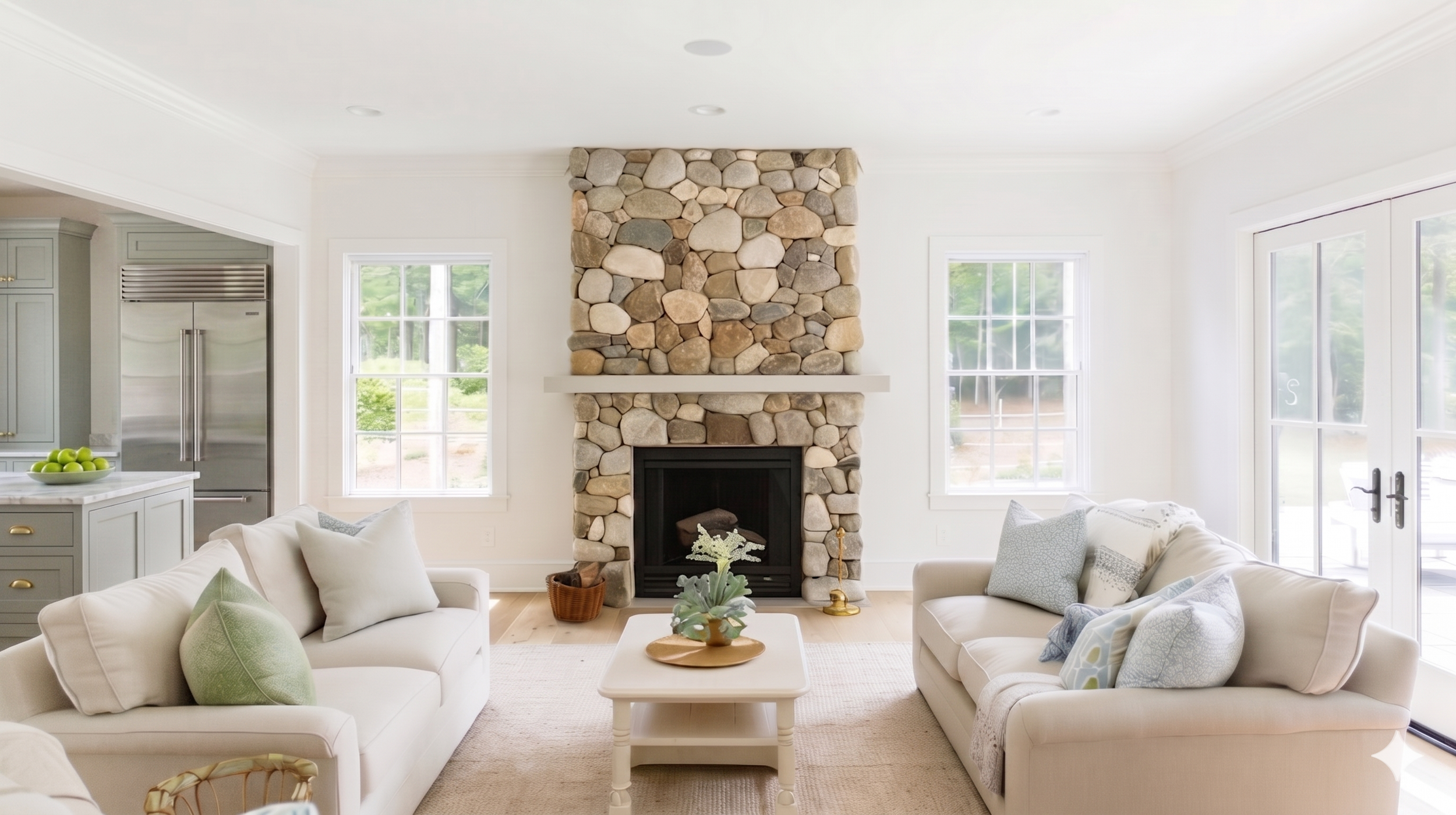
Concept Three: Tailored Fieldstone
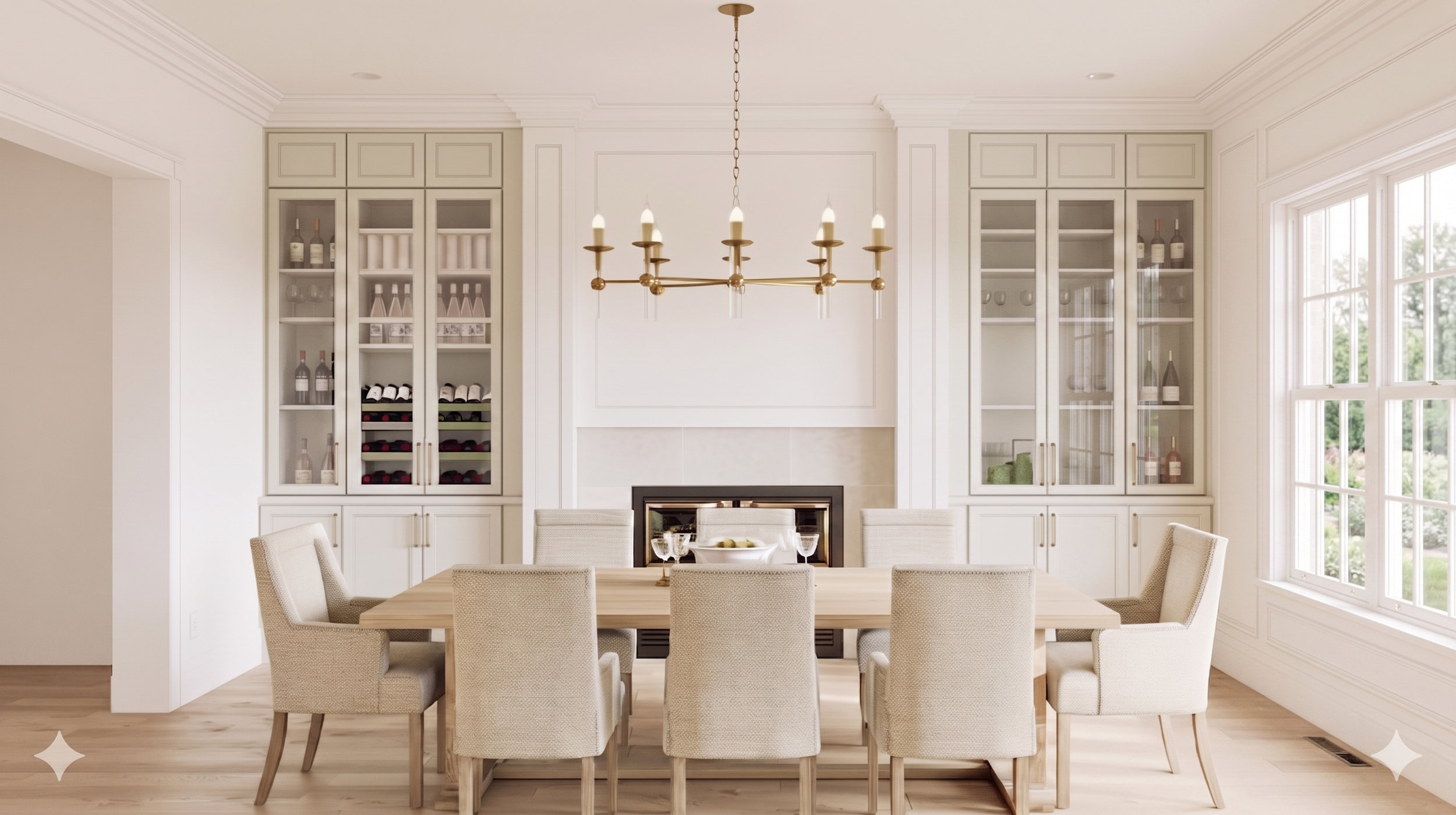
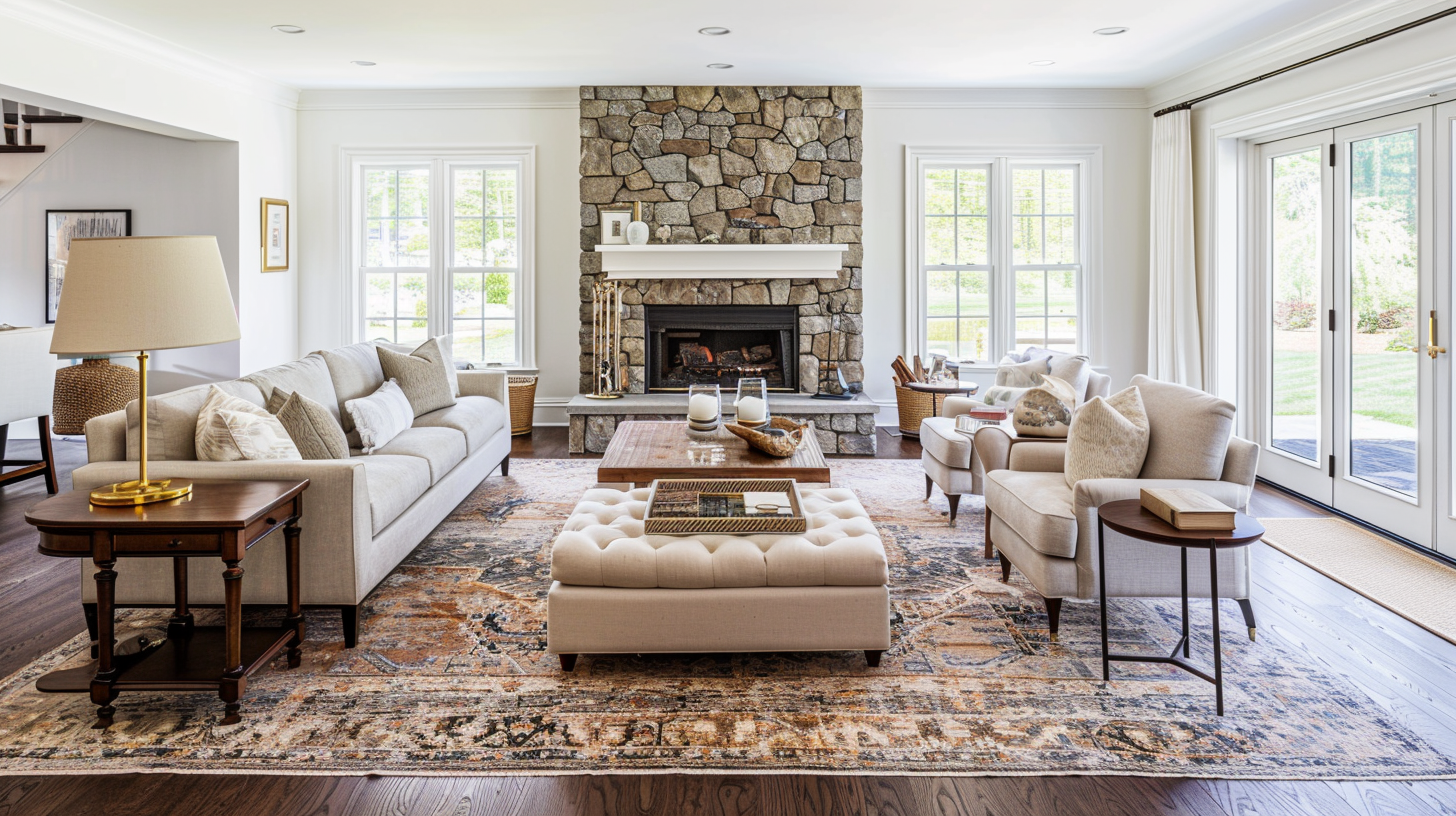
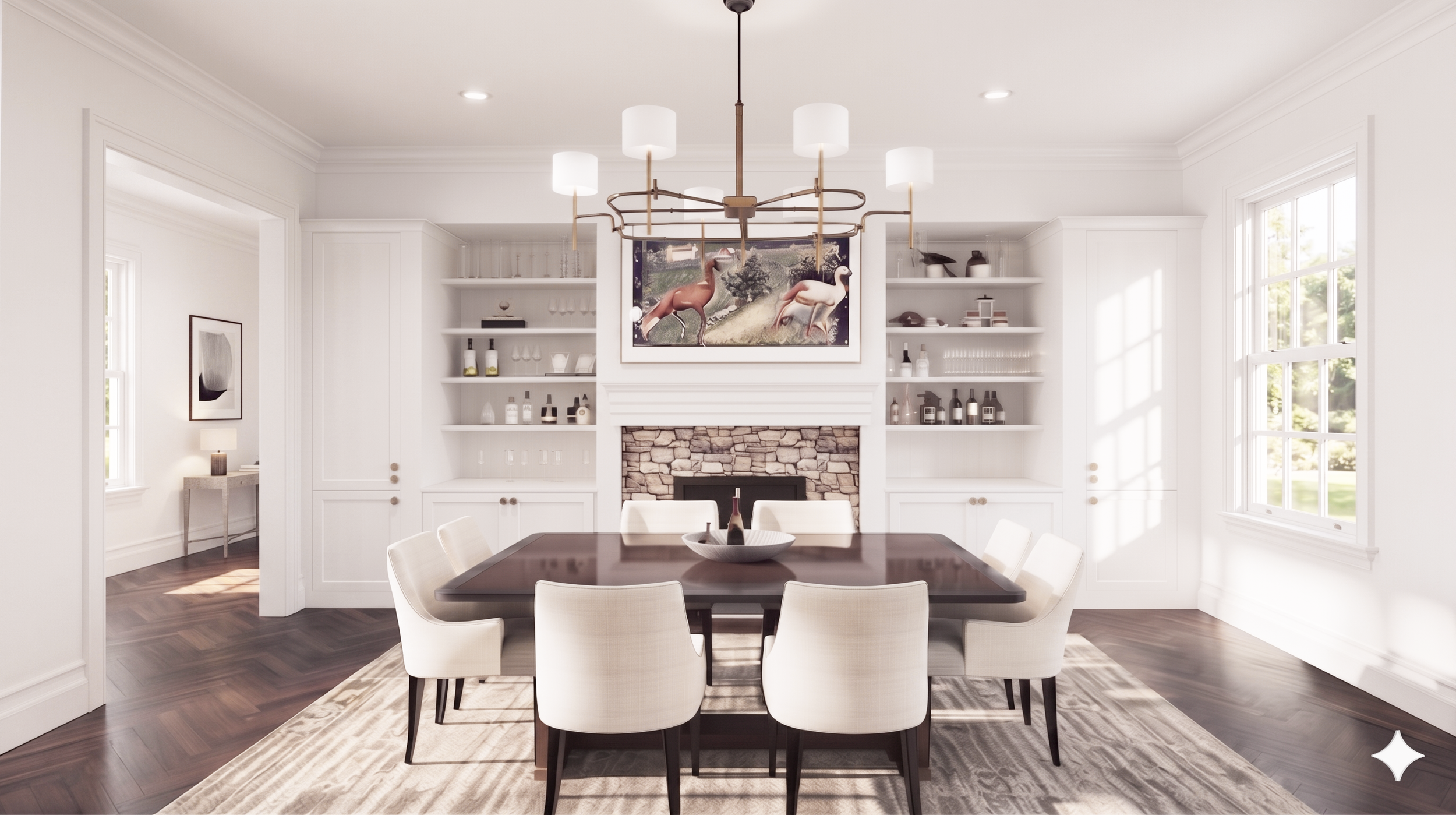
Tailored Fieldstone explored the most structured and architectural interpretation of the home. This direction was developed with the existing flooring stain more directly in mind, using stronger contrast, classic materials, and more tailored detailing to create a design language that could work with the home rather than against it.
Compared with the softer directions, this concept helped clarify how the renovation might feel if the existing architectural conditions became part of the foundation for the design. The result was a more grounded and polished version of modern farmhouse, with a stronger sense of permanence, definition, and architectural character.
Seeing The Direction Before committing To The Details
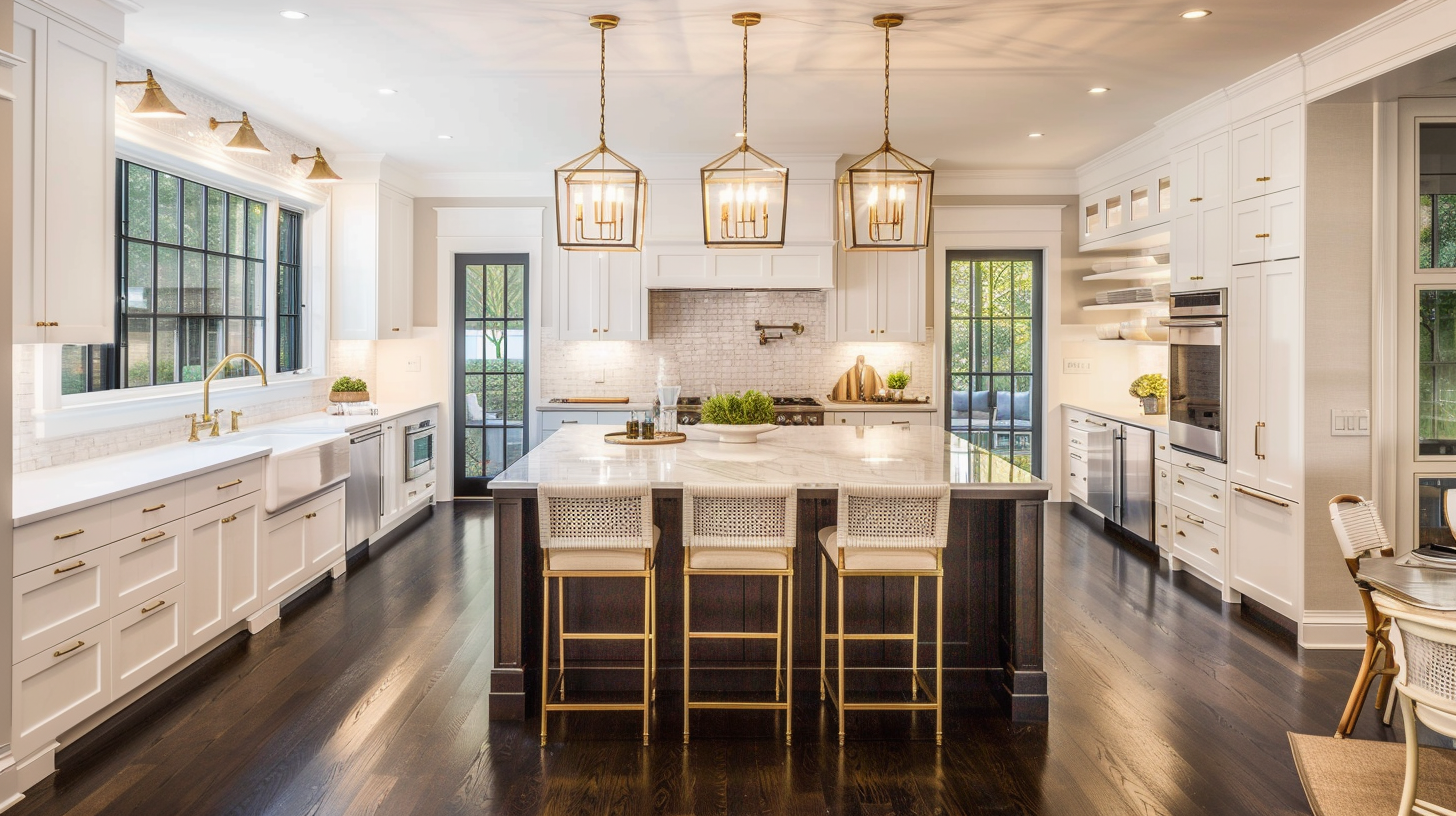
One of the most useful parts of a concept study is that it allows the client to see the direction of the home before the design moves into more detailed decisions.
In this phase, visual tools helped communicate the atmosphere of each concept more clearly and efficiently. But the value of the study was not simply in producing images quickly. The more important work was in shaping three distinct points of view, testing how each one related to the home, editing what did not belong, and giving the client a clearer way to compare possibilities.
This kind of early visual exploration helps prevent the design process from becoming a series of disconnected choices. Instead of evaluating one finish, fixture, or material at a time, the client can respond to the larger story first — how the home should feel, what it should emphasize, and which direction creates the strongest foundation for the next phase of design.
Why A Concept Study Matters In A Renovation
A concept study is especially valuable at the beginning of a renovation because it gives the design process a clearer starting point. Before the project moves into drawings, finish selections, cabinetry details, lighting, fixtures, and construction coordination, the larger direction needs to be understood.
Without that clarity, decisions can start to feel isolated. A tile may look beautiful on its own, a cabinet finish may seem appealing, or a light fixture may feel right in the moment — but if those choices are not connected to a larger vision, the home can begin to feel fragmented.
Early concept planning helps prevent that. It creates a framework for decision-making, allowing each later choice to be evaluated against the overall direction of the home. The question becomes less, “Do we like this individual item?” and more, “Does this support the direction we have already defined?”
It can also have a meaningful impact on budget. When a concept study takes existing conditions into account — such as flooring, architectural details, or other elements that may remain — it helps the client understand whether those existing elements can be worked into the new direction. If the client connects with a concept that thoughtfully incorporates what is already there, it may reduce the need for unnecessary replacement, rework, or scope expansion.
For the Vanderbilt House, the concept study helped create that framework before the project moved into more specific design decisions. It allowed the client to compare possibilities, understand how each direction related to the home’s existing conditions, and begin narrowing the direction with greater confidence.
What The Client Responded To
One of the most valuable outcomes of the concept study was that it gave the client a clear way to respond to the possibilities in front of her.
While each direction served a purpose, Salt Meadow resonated most strongly with her overall vision. The kitchen concept, in particular, became an important point of connection. Even though the relationship between the kitchen and adjacent breakfast area had not been the original focus of the study, the images helped reveal how meaningful that transition could be in shaping the daily experience of the home.
The study also clarified what did not feel right. Tailored Fieldstone had been developed with the existing flooring stain more directly in mind, but the client did not connect with that direction. That response was useful. It helped confirm that keeping the existing floor color would likely limit the design in a way that did not support her preferred vision, and that sanding and re-staining the floors throughout the house would need to become part of the larger renovation conversation.
This is exactly why early concept planning matters. The study did not simply produce attractive images; it created a decision-making tool. It helped the client understand what felt aligned, what felt limiting, and which existing conditions were worth reconsidering before the project moved into more detailed planning.
Conclusion
The Vanderbilt House concept study showed how much can be clarified before a renovation moves into detailed decisions. By exploring three distinct design directions, the client was able to see not only what she loved, but also what existing conditions might need to change in order to support the direction that felt right.
That clarity is the value of early concept planning. It helps homeowners move beyond scattered inspiration images and isolated selections, and instead begin with a more complete understanding of how the home should feel, what the design should support, and which decisions will have the greatest impact on the renovation.
One home can tell many design stories. The right concept study helps reveal which one is worth pursuing.

Mimi Fong
Founder+Principal
White Plains, NY