Architect or Interior Designer First in a Renovation?

Renovation planning often begins with careful study of layout, materials, and how the home will function once construction is complete.
Architect or Interior Designer First: What Homeowners Should Consider
One of the most common questions people ask when planning a renovation is surprisingly simple:
Where do we begin?
For many homeowners, that question arises long before construction begins — often at the moment when the limitations of the current layout become impossible to ignore.
Should the first call be to an architect?
Or should an interior designer be involved from the start?
When both structural changes and interior layout improvements are being considered, it is natural to wonder whether to hire an architect or interior designer first.
The answer depends on the scope of the project, but in many residential renovations the most effective approach is to establish a clear design direction before architectural drawings are finalized. Early design direction can also help homeowners compare possibilities before committing to more detailed drawings, selections, or construction decisions. In our Vanderbilt House concept study, for example, three distinct design directions helped clarify how a modern farmhouse renovation could evolve before the project moved deeper into design development.
Interior planning influences how rooms function, how kitchens are organized, how lighting works throughout the home, and how daily routines unfold. When these considerations are explored early, the architectural design can evolve in a way that better supports how the home will actually be used.
This type of planning is especially important in whole-home renovations and new construction projects, where structural decisions and interior layout planning often develop together. Understanding how architects and interior designers work together can help homeowners start a renovation with a more coordinated plan.
If you’re unsure how the roles differ, you may also find it helpful to read Interior Designer vs Architect: Who Does What in a Home Renovation, which explains how these two disciplines contribute to a successful project.
What Architects and Interior Designers Each Contribute
Both architects and interior designers play essential roles in a renovation, but their areas of focus are different.
Architects typically concentrate on the structural and technical aspects of a home. Their work may include designing additions, modifying load-bearing walls, preparing construction drawings, coordinating with engineers and builders, and guiding the permitting process.
Interior designers approach the project from the perspective of how the home will function once construction is complete. This includes planning room layouts, designing kitchens and bathrooms, coordinating cabinetry and millwork, collaborating on lighting strategies, and selecting materials and finishes that support the overall design direction.
Because these responsibilities intersect, successful renovations often benefit from collaboration between both disciplines. At this stage, many homeowners also want to understand how much an interior designer can directly influence the floor plan itself. For a closer look, see can interior designers change floor plans.
Architectural planning establishes the structural framework of the project, while interior design planning focuses on how rooms will be used, how circulation flows through the home, and how the details of daily life are supported once construction is finished.
When these two perspectives develop together, structural decisions and functional design can inform one another from the beginning, often leading to a more cohesive renovation plan.
Situations Where an Architect Should Come First
There are many renovation projects where beginning with an architect is the logical first step.
Projects that involve significant structural changes typically require architectural planning early in the process. This may include major home additions, removing or relocating load-bearing walls, extensive exterior modifications, or designing an entirely new house.
In these situations, the architect’s work establishes the structural framework of the renovation. The location of walls, windows, and major structural elements, as well as the mechanical systems for the building, must be resolved before the project can move into detailed design planning.
Historic homes can also require early architectural involvement. Renovations in older houses sometimes involve structural upgrades, building code considerations, or coordination with local preservation guidelines, all of which fall within the architect’s expertise.
Once the structural framework of the project begins to take shape, the focus naturally expands beyond structure alone to consider how the interior layout will function, how rooms will be organized, and how the home will support everyday living. At that stage, coordination between architectural planning and interior planning becomes especially valuable.
The Most Effective Approach: Early Collaboration
While some renovations begin with architectural planning and others begin with interior design planning, many of the most successful residential projects develop through collaboration between the two disciplines and the client early in the process.
Architects and interior designers bring different areas of expertise to a renovation. When these perspectives are introduced at the beginning of a project rather than sequentially, the design process often becomes more efficient and better coordinated.
Architectural planning establishes the structural framework of the renovation — defining walls, window openings, and the overall configuration of the building. Interior design planning develops alongside that framework, addressing how the layout will function, how cabinetry and millwork integrate with the architecture, and how lighting and materials support the overall design direction.
When these conversations happen early, the project team can evaluate decisions collectively rather than revisiting them later in the process. This often leads to a clearer planning phase and a more cohesive renovation strategy before construction drawings are finalized.
In practice, this collaborative approach frequently reveals design possibilities that may not be immediately apparent. In many residential renovations, architectural planning and interior planning develop together, allowing structural decisions and functional design to inform one another from the beginning. This collaborative approach is central to the Luminosus design process.
A Real-World Example of Collaborative Renovation Planning
One example illustrates how this collaborative process can unfold in practice.
In a recent renovation project in Briarcliff Manor, the architect had already developed a preliminary floor plan for a primary bathroom as part of a larger home renovation. The homeowners wanted to be certain they were making the best use of the existing footprint, so they invited an additional design perspective before the planning process moved further.
By studying circulation, fixture placement, and storage more closely, it became possible to reorganize the layout in a way that improved functionality while staying within the existing structure and incorporating the features the clients had hoped for. The revised plan created a more comfortable arrangement of the shower, vanity, and storage areas, and introduced a spa tub by annexing underutilized closet space.
Rather than expanding the footprint of the home, the solution emerged from a more careful study of how the existing interior layout could be reorganized. This approach allowed the renovation to achieve the desired functionality while working within the architectural framework already established for the project.
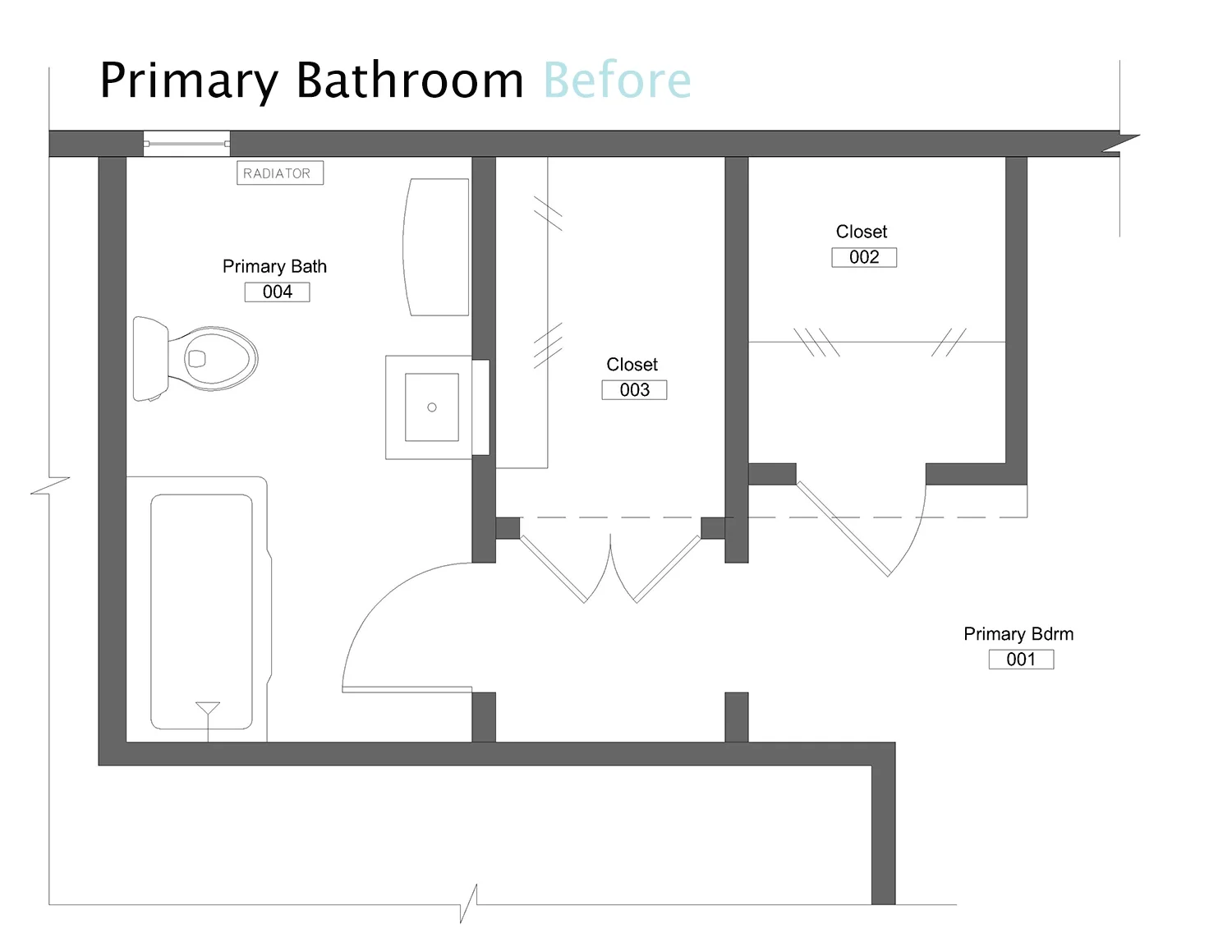
Original layout of the Old Briarcliff primary bathroom before renovation
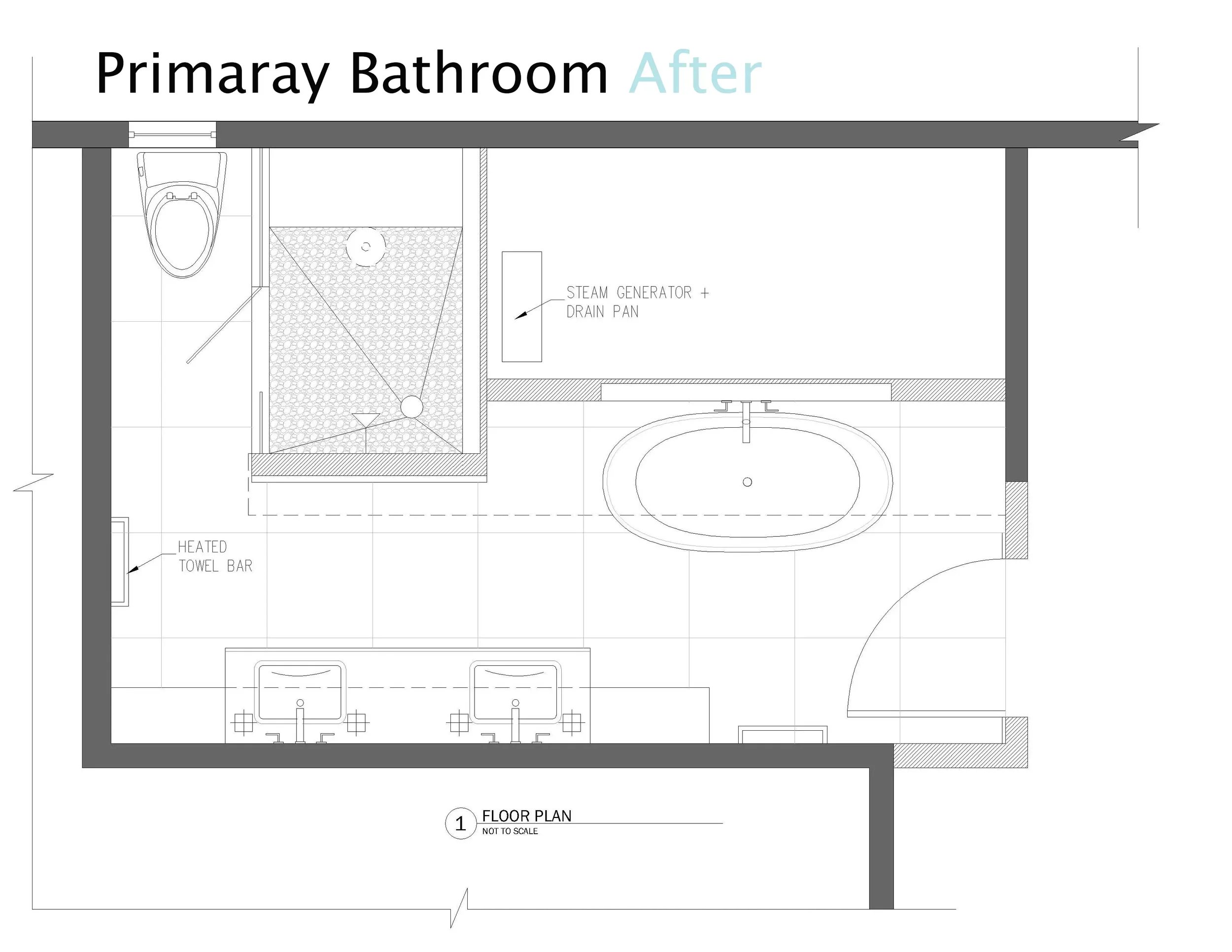
Revised layout reorganizing the bathroom and incorporating a spa tub
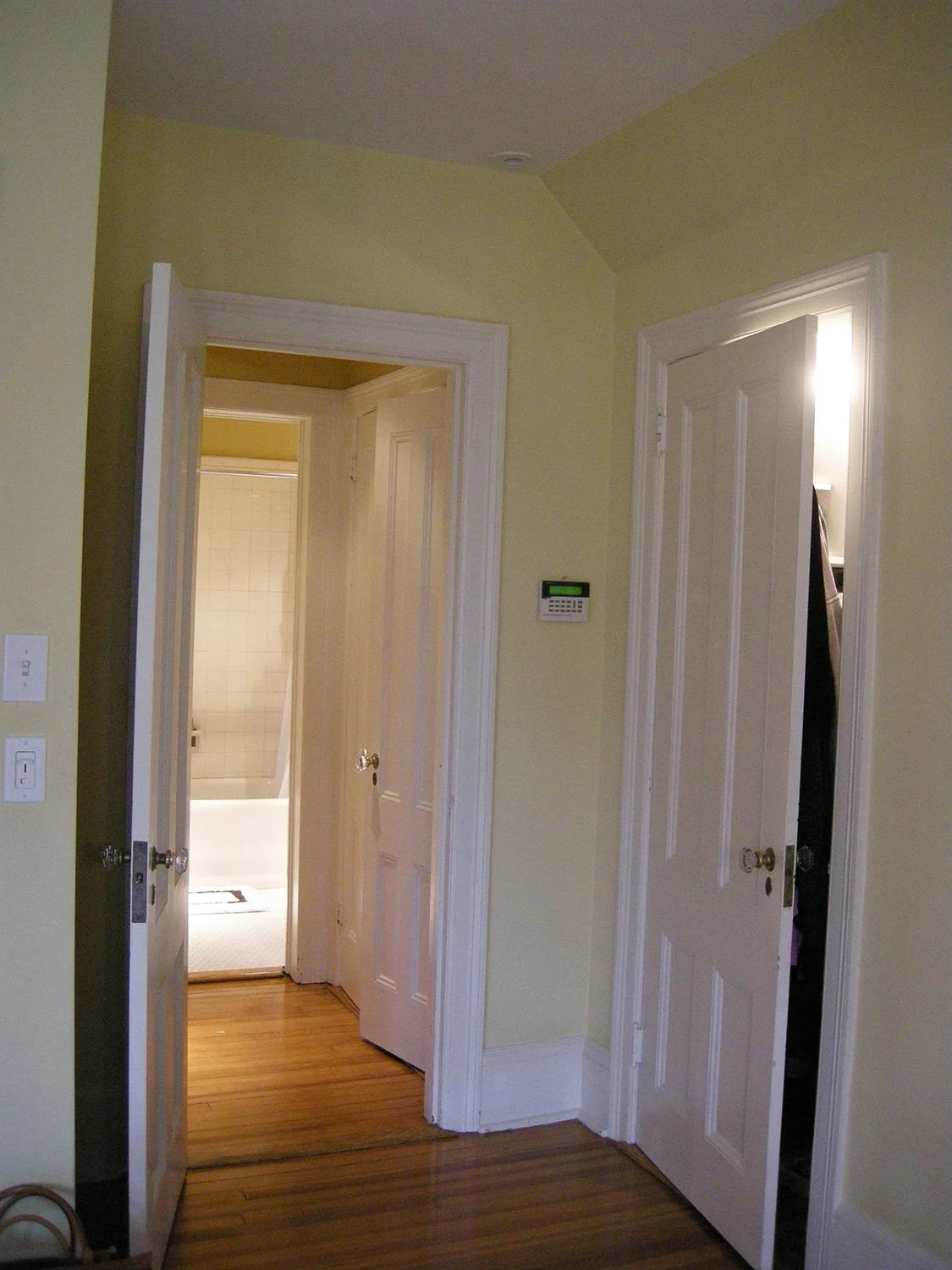
Existing bathroom prior to renovation.
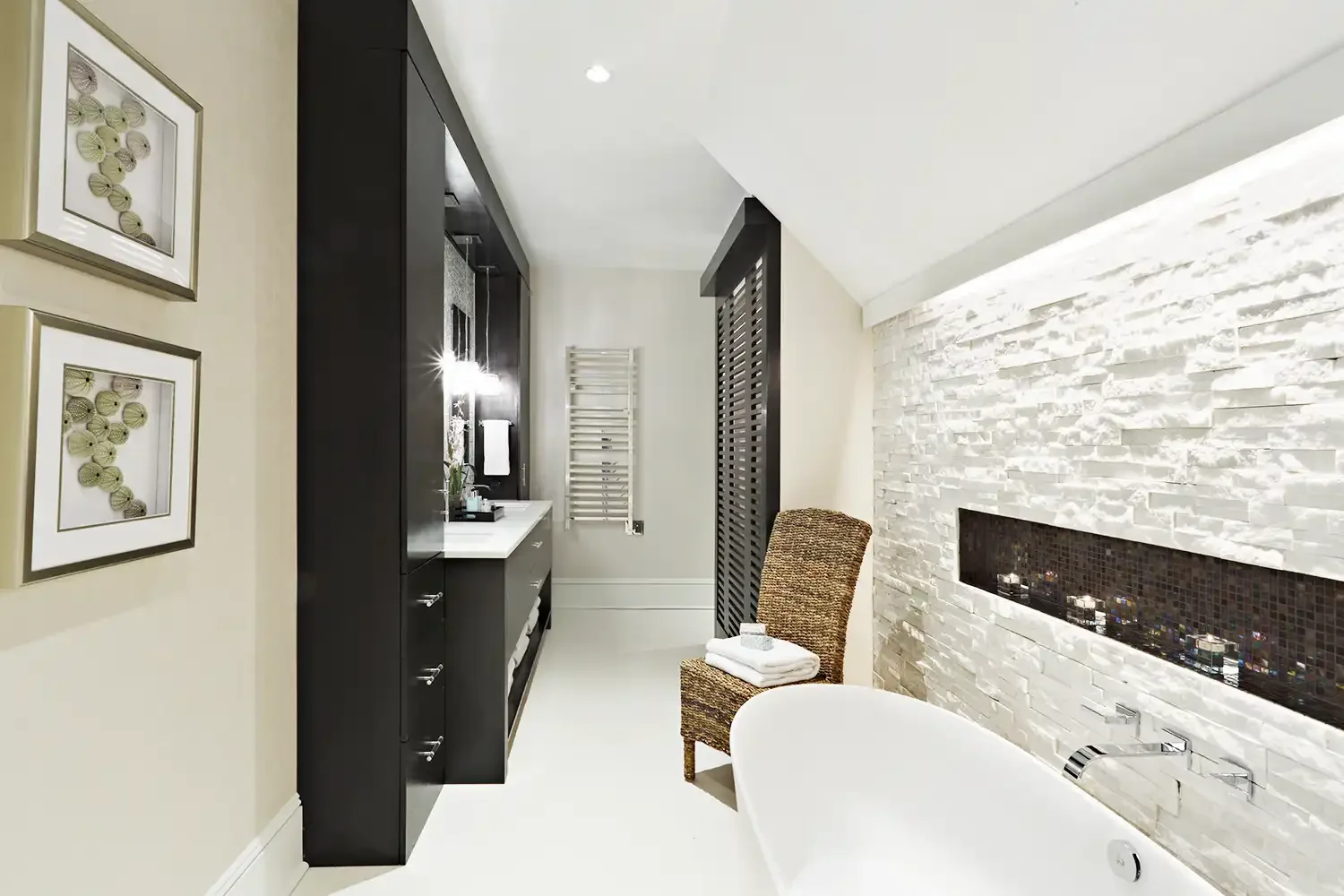
Completed primary bathroom after renovation
The resulting renovation demonstrates how careful study of an existing layout can reveal opportunities that are not immediately obvious.
For homeowners, examples like this demonstrate how thoughtful design exploration during the planning stage can reveal solutions that make better use of the home’s existing structure.
Starting a Renovation with a Clear Plan
The question of whether to hire an architect or an interior designer first does not have a single answer. The right starting point often depends on the scope of the renovation and the types of changes being considered.
Projects that involve major structural work may naturally begin with architectural planning. Others may benefit from exploring layout and interior planning before architectural drawings are finalized. Our guide to common renovation mistakes in Fairfield and Westchester homes looks more closely at why early planning, budget clarity, and the right professional guidance can help homeowners avoid costly decisions later.
In many residential renovations, however, the most effective approach is not choosing one discipline over the other, but allowing architectural planning and interior design planning to develop together early in the process.
When architects, interior designers, and homeowners collaborate from the beginning, the project can be evaluated from multiple perspectives before construction decisions are finalized. Structural considerations, functional layout, and design details evolve together rather than being addressed in isolation.
For homeowners planning a renovation in Fairfield County, Westchester County, or the surrounding region, the real question is often not simply whether to hire an architect or interior designer first, but how assembling the right team early can help shape a thoughtful renovation plan that feels cohesive, well organized, and carefully aligned with how the home will be used for years to come. After deciding when to bring a designer into the process, homeowners should also understand how to choose an interior designer for a renovation and what questions reveal the right fit.
Frequently Asked Questions About Renovation Planning
▪ Do I always need an architect for a home renovation?
Not every renovation requires architectural drawings. Projects that involve structural changes, additions, or significant exterior modifications typically require an architect to prepare construction drawings and coordinate with engineers and local permitting requirements. Renovations that focus primarily on interior layout, cabinetry, finishes, or lighting may not require architectural services, though the specific requirements vary depending on the scope of the project and local regulations.
▪ Can an interior designer change the layout of a home?
Interior designers frequently study and propose layout improvements as part of renovation planning. This may include reorganizing kitchens, bathrooms, and living areas to improve circulation, storage, and overall functionality.
Interior designers can often reconfigure layouts that involve non-structural interior walls, allowing rooms to be reorganized to better support how the home is used. When proposed layout changes involve load-bearing or structural walls, the interior designer typically collaborates with an architect or structural engineer to ensure that the design aligns with the structural requirements of the house.
This type of layout planning is different from decorating. While decorators focus primarily on furnishings and finishes after construction is complete, interior designers are often involved earlier in the renovation process to study how the layout of the home can be improved.
▪ What happens first in the renovation design process?
The first step in renovation design planning is documenting the existing conditions of the home. This typically involves preparing measured drawings that record the current layout of the house, including floor plans and elevations. Existing lighting, electrical outlets, mechanical systems, and other building elements are also documented.
This information provides an accurate picture of how the house is currently built and how its systems are organized. With this documentation in place, the design team can study the home carefully before proposing layout changes or design solutions.
Understanding the existing conditions of the house allows renovation planning to proceed with greater clarity and helps ensure that future design decisions align with the structure and systems already in place.
▪ Do kitchen and bathroom renovations require architectural drawings?
Kitchen and bathroom renovations that involve structural changes, plumbing relocations, or significant layout modifications may require architectural drawings depending on the scope of the project.
Even when a renovation does not involve major structural changes, having clear construction documentation is often beneficial. Detailed drawings help contractors understand the design intent, allow bids to be prepared more accurately, and provide guidance during renovation.
Interior designers frequently prepare this type of documentation as part of interior planning. This may include floor plans, cabinetry drawings, lighting plans, and coordination drawings that help align the work of contractors and trades. Developing this level of detail allows the design to be studied thoroughly before renovation begins.

Mimi Fong
Founder+Principal
White Plains, NY