Can an Interior Designer Change the Floor Plan of a Home?
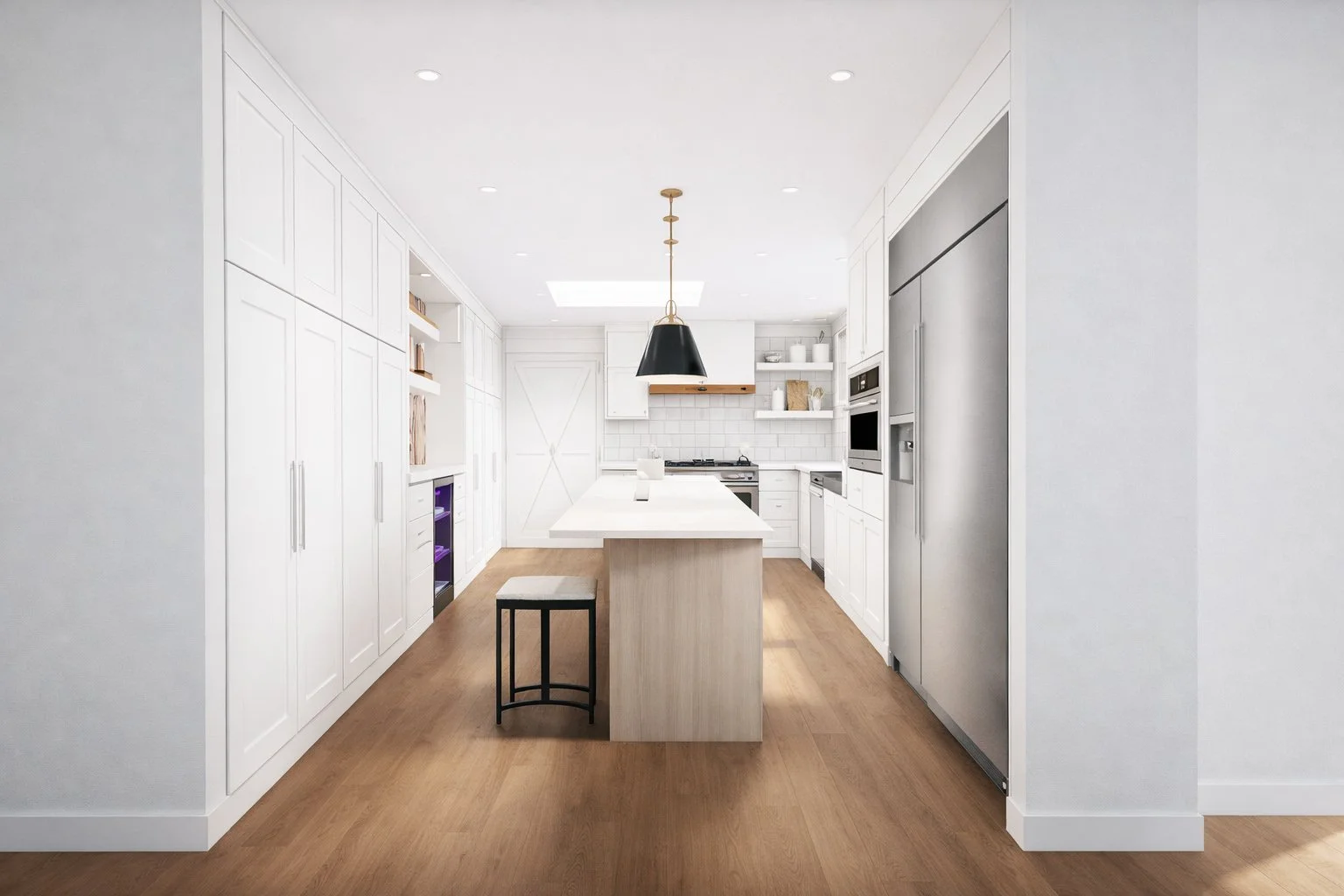
Yes—But It Depends on the Type of Change
The short answer is yes—an interior designer can absolutely influence the floor plan of a home.
But what that means in practice depends on the type of change you’re considering. Interior designers regularly evaluate and rework floor plans by developing plans based on how a home needs to function. This includes studying circulation, room relationships, and how each area is used day to day.
If a proposed change involves non-load-bearing walls, those adjustments can often be incorporated directly into the design.
If the change affects load-bearing elements, such as structural walls or framing, an architect or structural engineer must be involved to review and provide the necessary structural design.
Understanding this distinction early helps clarify what is possible within design—and when additional expertise is required.
If you’re already weighing roles, it may also be helpful to understand the difference between an interior designer and an architect before moving further into these decisions.
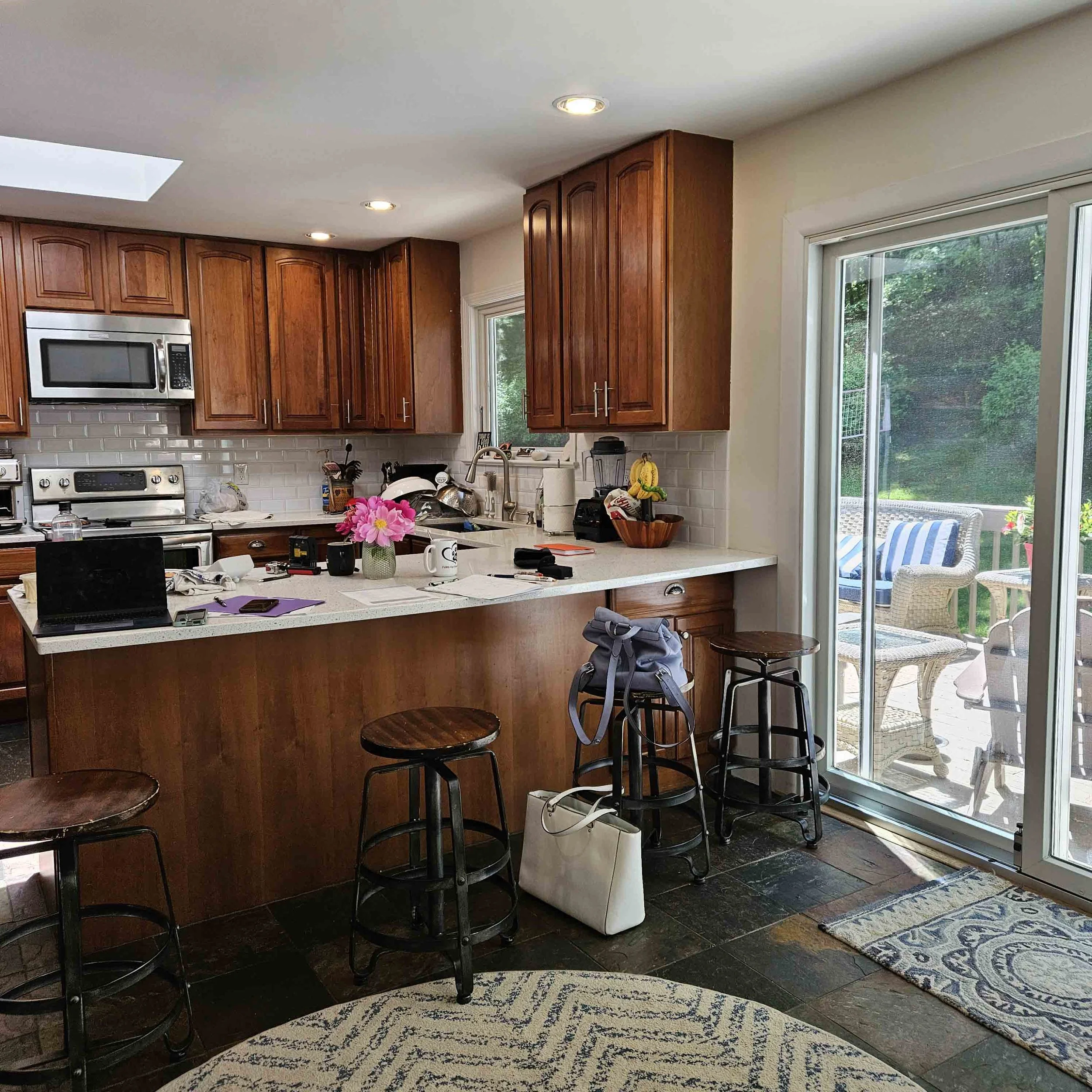
A typical enclosed U-shaped kitchen with limited flexibility
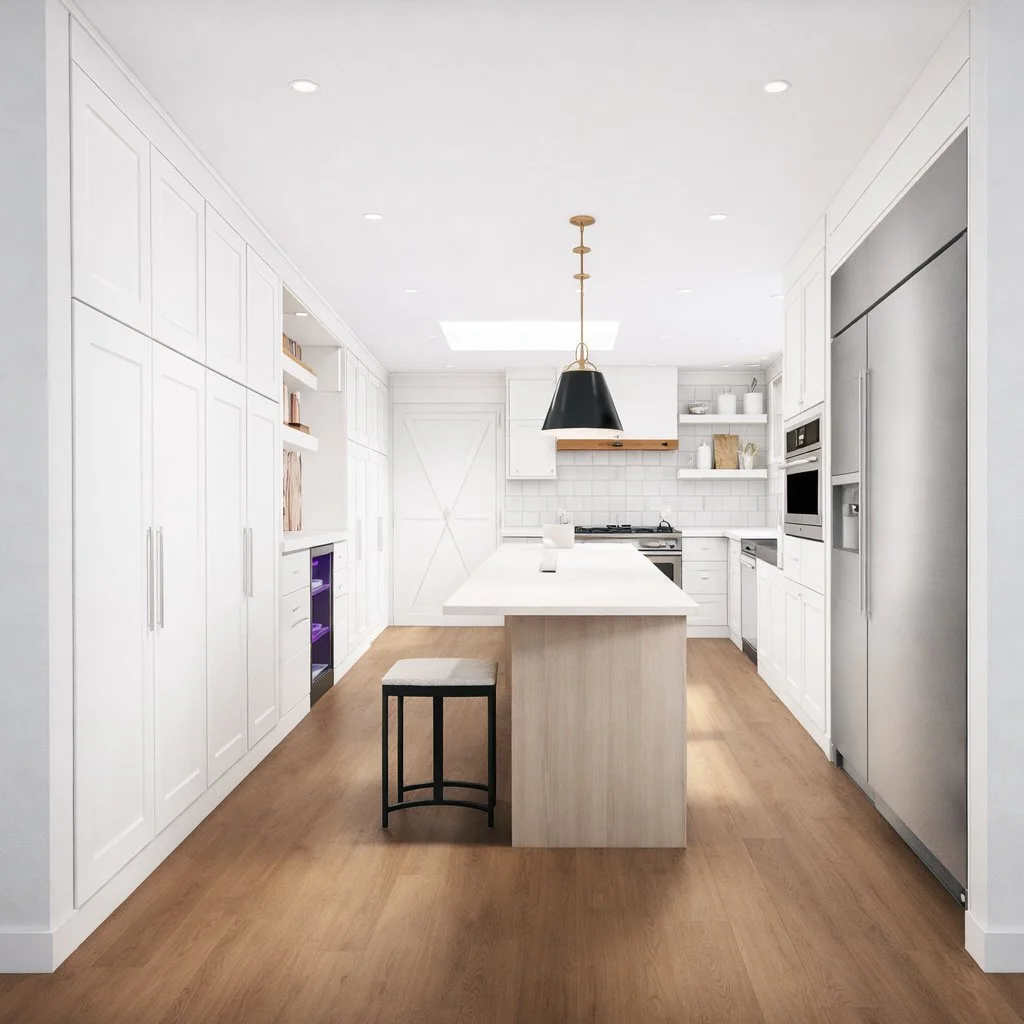
A reconfigured plan that improves circulation and introduces a central island.
What Floor Plan Improvements Do Not Require Moving Walls
Many meaningful improvements can be made without changing the floor plan of the home.
Interior designers regularly rework how spaces function by:
redefining room purpose
improving circulation and flow
adjusting furniture arrangements and sightlines
refining kitchens, bathrooms, and living areas within existing footprints
These changes can significantly improve daily use and overall comfort—without requiring construction that alters walls. In such cases, the issue is not the size of the home, but how the existing plan is being used.
When Changes Involve Modifying Walls
Other changes go further—requiring walls to be removed or relocated, openings to be widened, or rooms to be reconfigured entirely.
A common example is the U-shaped kitchen found in many homes built in the 1980s. While often generous in square footage, this configuration is not as efficient and can feel enclosed by today’s standards. At the same time, it is not always wide enough to comfortably accommodate an island without rethinking the entire plan.
What appears to be a simple update—adding an island or opening the space—quickly becomes a broader planning exercise involving circulation, storage, and how the kitchen connects to adjacent rooms.
In projects like these, spatial decisions are rarely isolated. They are part of a larger renovation strategy, such as those outlined in kitchen renovation planning in Darien.
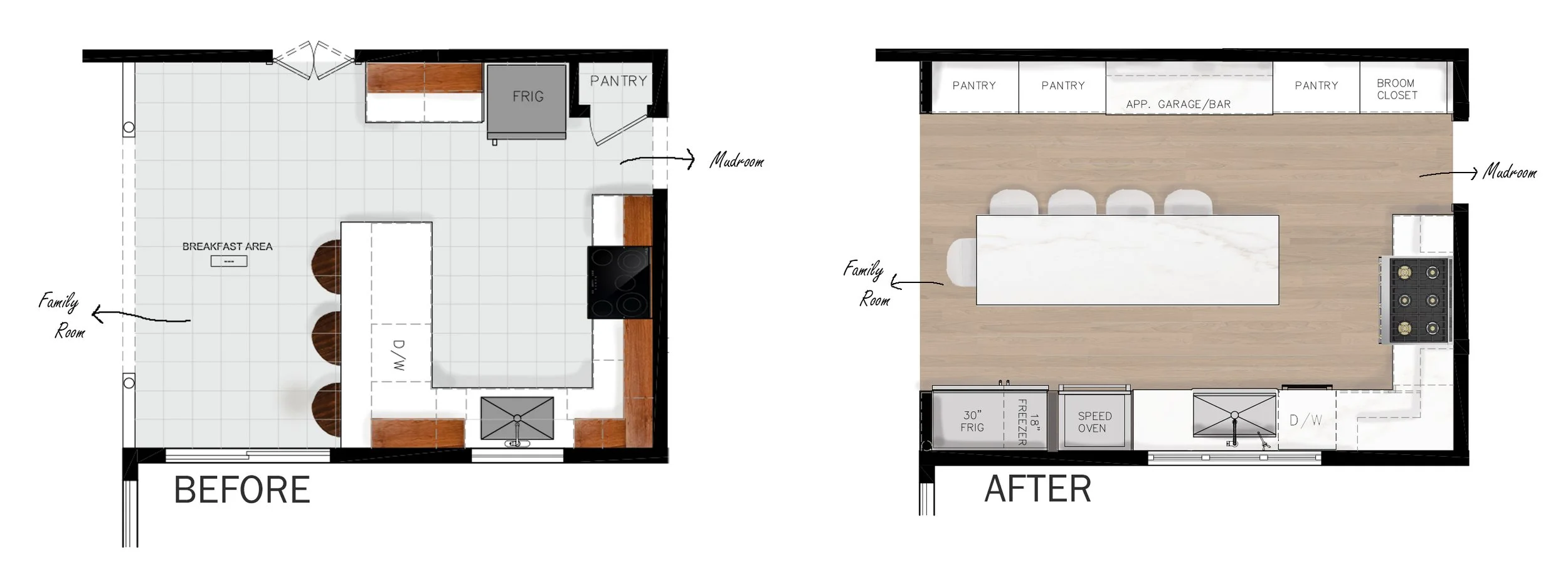
Before (U-Shaped Kitchen)
Circulation is confined within the working area
Movement requires frequent turning and backtracking
Limited flexibility for multiple users
No space to introduce an island without reconfiguring the plan
After (Reconfigured Plan)
Circulation moves around the island rather than through a confined zone
Clear, continuous paths between key areas
Improved function for multiple users
Central island creates a more flexible and usable layout
When an Architect or Engineer Becomes Necessary
Interior designers are not permitted to modify structural elements. When changes affect the structure of a home—such as removing or altering load-bearing walls—the design intent is coordinated with the architect or engineer to ensure it can be built safely and correctly.
For homeowners at the beginning of this process, one of the most common questions is whether to hire an architect or interior designer first. The answer often depends on the scope of the project—but in many renovations, early collaboration between both leads to the strongest outcome. If your project may involve layout changes, choosing an interior designer with renovation experience is especially important because floor plan decisions affect architecture, construction, furnishings, lighting, and budget.
Why Floor Plan Planning Is More Than Moving Walls
Spatial planning is often misunderstood as a purely physical exercise—moving walls, adding openings, or rearranging rooms. In reality, it is about how a home functions.
A well-considered plan accounts for:
how people move through the home
how spaces connect visually and physically
how rooms support daily routines
how proportions and scale feel in use
Two homes with the same square footage can feel entirely different depending on how these elements are addressed. This is where design goes beyond decoration. It becomes a framework for how the home is experienced.
How Floor Plans Are Developed and Tested
Thoughtful floor plan changes are not decided in a single step. They are developed and refined through a structured process.
This typically includes:
understanding how the home is currently used
identifying constraints and opportunities
testing multiple planning options
translating the preferred direction into plans that can be built
This process helps avoid costly revisions during construction and ensures that decisions are considered before work begins.
A more detailed look at this approach can be found in a step-by-step design process, where planning decisions are developed in coordination with the broader renovation.
What to Consider Before Changing a Floor Plan
Before committing to changes, it’s important to consider a few practical factors:
Structure—Not all walls can be removed without additional support
Budget—Structural changes often carry higher construction costs
Timeline—Permits and engineering can extend project timelines
Scope—Small adjustments can lead to broader renovation decisions
Understanding these variables early helps set realistic expectations and allows the project to move forward more smoothly. A concept study can support that process by clarifying how the home should feel, how key areas should relate to one another, and which ideas deserve further development. In the Vanderbilt House concept study, early visual planning helped reveal the importance of the kitchen’s connection to the adjacent breakfast area before the project moved into more detailed decisions.
A Well-Planned Home Shapes Everything That Follows
Floor plan decisions are not just one part of a renovation—they influence everything that comes after. When the plan is resolved early and thoughtfully, the rest of the project—materials, finishes, furnishings—can build on a strong foundation.
When it is not, even the most beautiful selections struggle to compensate for a plan that doesn’t fully support how the home is meant to function. For this reason, floor plan planning is often one of the most valuable contributions an interior designer can make at the start of a renovation.
Frequently Asked Questions
▪ How do you know if a wall is load-bearing before starting a renovation?
This typically cannot be confirmed by visual inspection alone. Structural drawings, framing direction, and on-site conditions all need to be reviewed, often with input from an architect or structural engineer. Early evaluation helps avoid design decisions that cannot be executed.
▪ What are the most common limitations when trying to change a floor plan?
Structural walls are one constraint, but they are not the only one. Plumbing locations, window placement, ceiling heights, and mechanical systems can all influence what is possible. In many homes, these factors need to be considered together rather than in isolation.
▪ Can floor plan changes affect resale value?
Yes. Improvements that enhance flow, natural light, and functionality can increase long-term value, while poorly considered changes can have the opposite effect. A well-planned floor plan tends to appeal to a broader range of future buyers.
▪ Are permits always required when changing a floor plan?
Permits are typically required when changes involve structural elements, electrical work, plumbing, or mechanical systems. Requirements vary by location, but most renovations that go beyond cosmetic updates will involve some level of permitting.
▪ How many floor plan options should be explored before deciding?
Exploring more than one option is often essential. Comparing different approaches helps clarify priorities, reveal trade-offs, and lead to a more considered decision before construction begins.
▪ What is the most common mistake homeowners make when changing a floor plan?
Focusing on individual rooms rather than how the home functions as a whole. Floor plan decisions work best when circulation, relationships between spaces, and daily routines are considered together from the outset.

Mimi Fong
Founder+Principal
White Plains, NY