Vanderbilt House Main Level Concept Study
What Our Client Wanted
Our client wanted their Norwalk home to feel lighter, airier, and more connected, but the early conversation revealed that the project was about more than refreshing the interiors. The kitchen did not function as well as they wanted, the formal dining room was underused, and part of the formal living room had become an awkward home office area. At the same time, the family still needed a generous dining space for entertaining, since guests naturally gathered around the kitchen and family room.
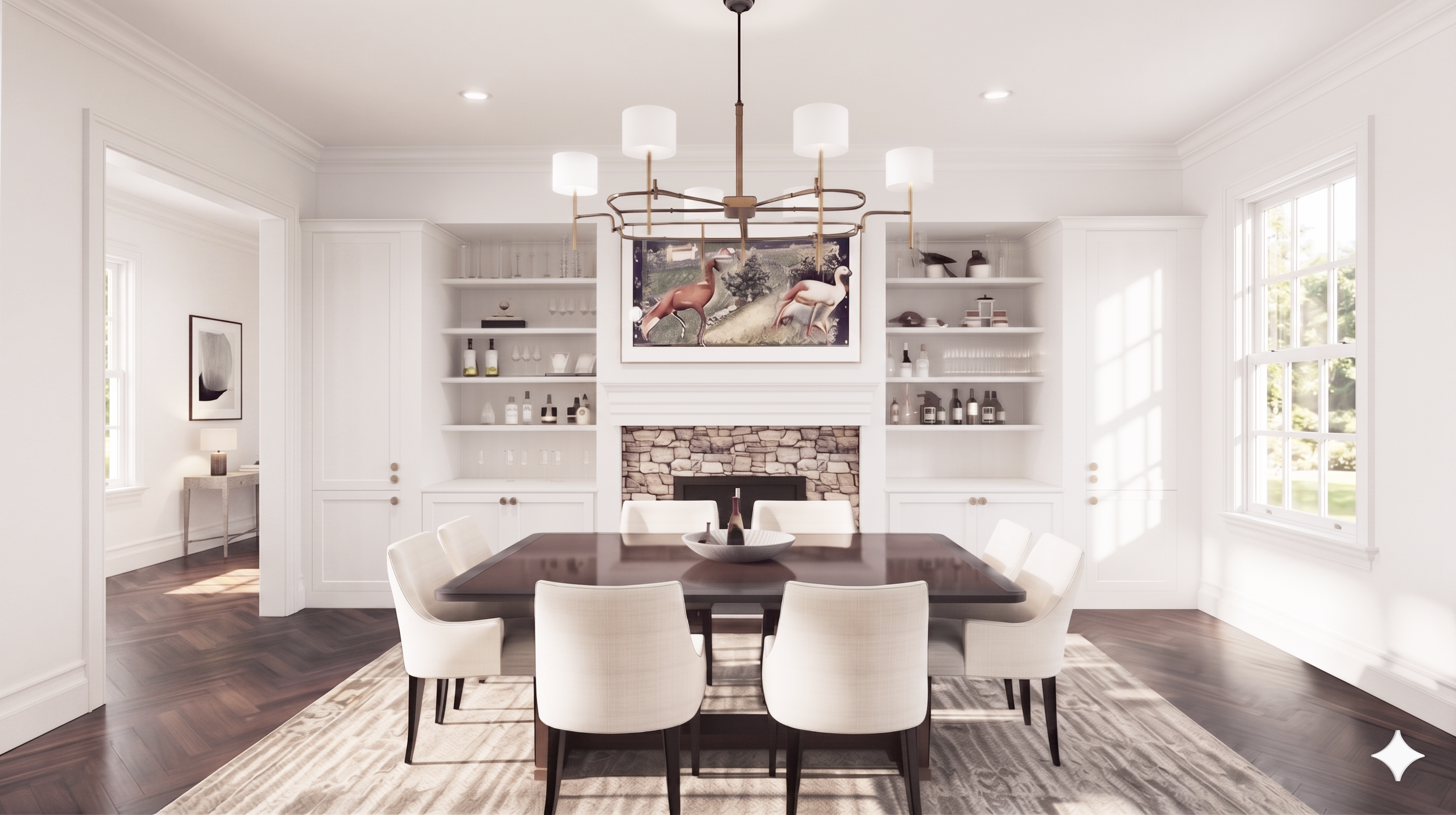
After surveying the existing rooms and discussing how the family lived in the house, Mimi explored whether the main level could work better if several rooms were reassigned. The husband’s work area could move to an upstairs guest bedroom. The formal dining function could move into the long, narrow formal living room, where a substantial dining table would make better use of the room’s proportions. The existing formal dining room could then be opened to the kitchen, allowing for a larger island and an adjacent breakfast area. Removing the wall between the kitchen and family room would create a more open connection between the rooms where the family and guests already spent the most time.
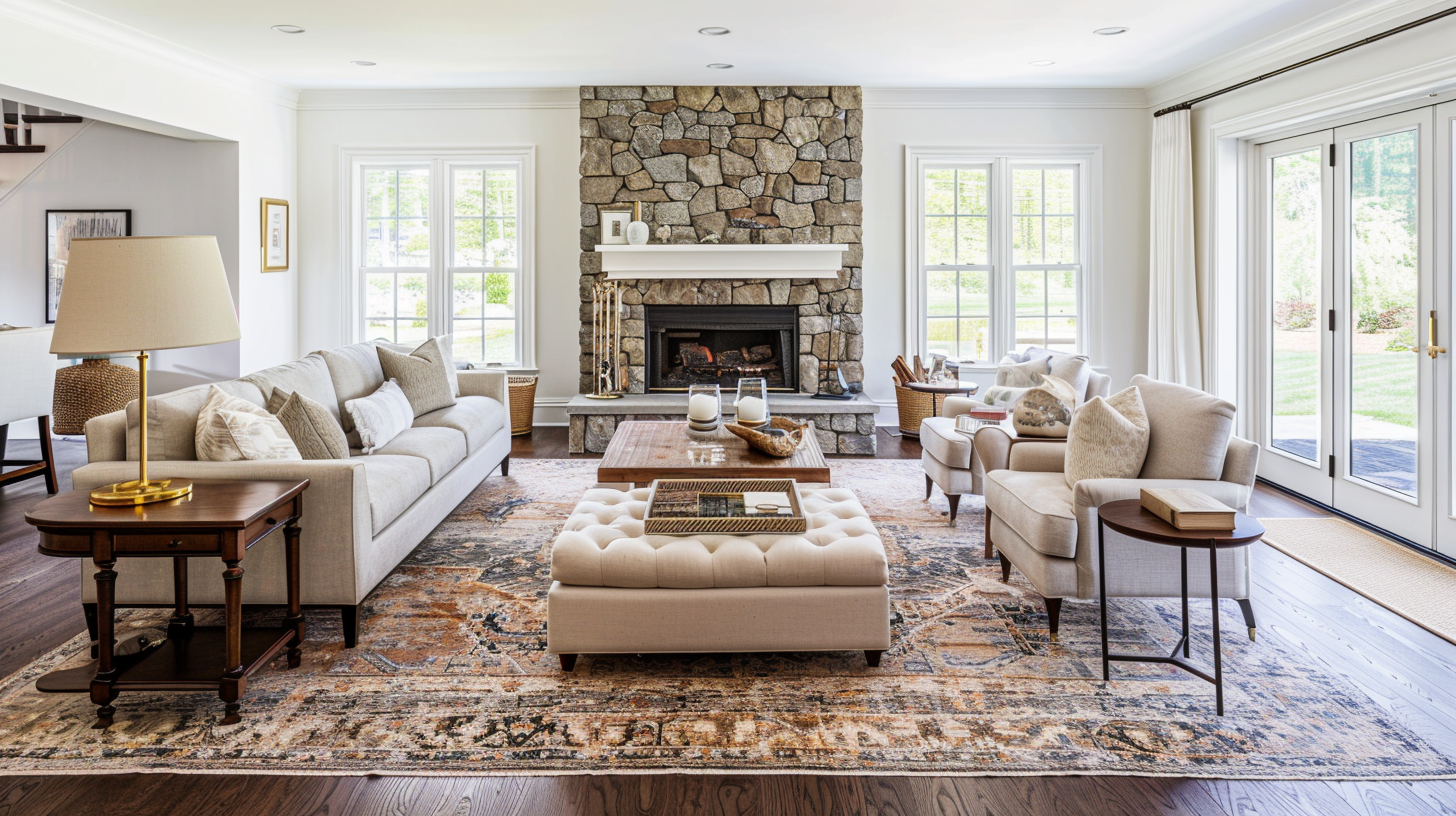
The concept study explored the kitchen, family room, dining room, foyer, and powder room as a connected sequence rather than as separate decorating projects. The goal was to clarify the planning direction and overall mood of the main level before moving into deeper design development, documentation, and construction planning.
What the Study Clarified
The study helped the homeowners see that the most important opportunity was not simply to update finishes, but to rethink how the main level could function. By moving the home office upstairs, relocating the dining area, expanding the kitchen into the former dining room, adding a breakfast area, and opening the kitchen to the family room, the home could better support both everyday living and entertaining.
Seeing multiple design directions side by side also clarified the emotional tone of the renovation. Each concept tested the same planning goals through a different visual lens: a larger and more efficient kitchen, a more connected family room, a reassigned dining room, improved circulation, and a lighter overall feeling.
Salt Meadow emerged as the strongest direction, balancing lightness, warmth, and restraint without forcing the house into a style that did not belong to its architecture. Quiet Harvest offered a softer and more quietly traditional interpretation, while Tailored Fieldstone tested a more grounded, contrast-driven palette. Together, the concepts gave the homeowners a clearer foundation for moving forward with confidence.
Salt Meadow
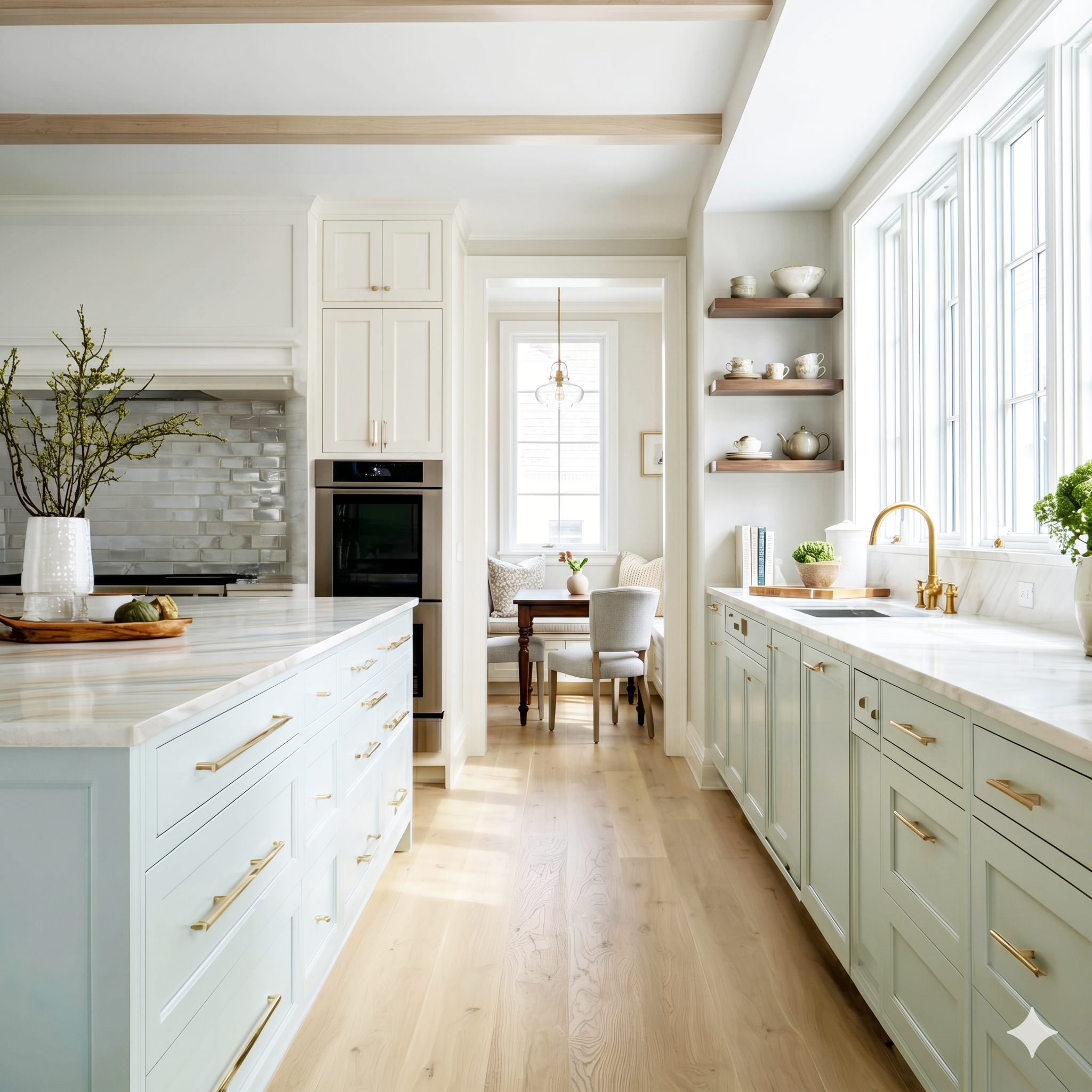
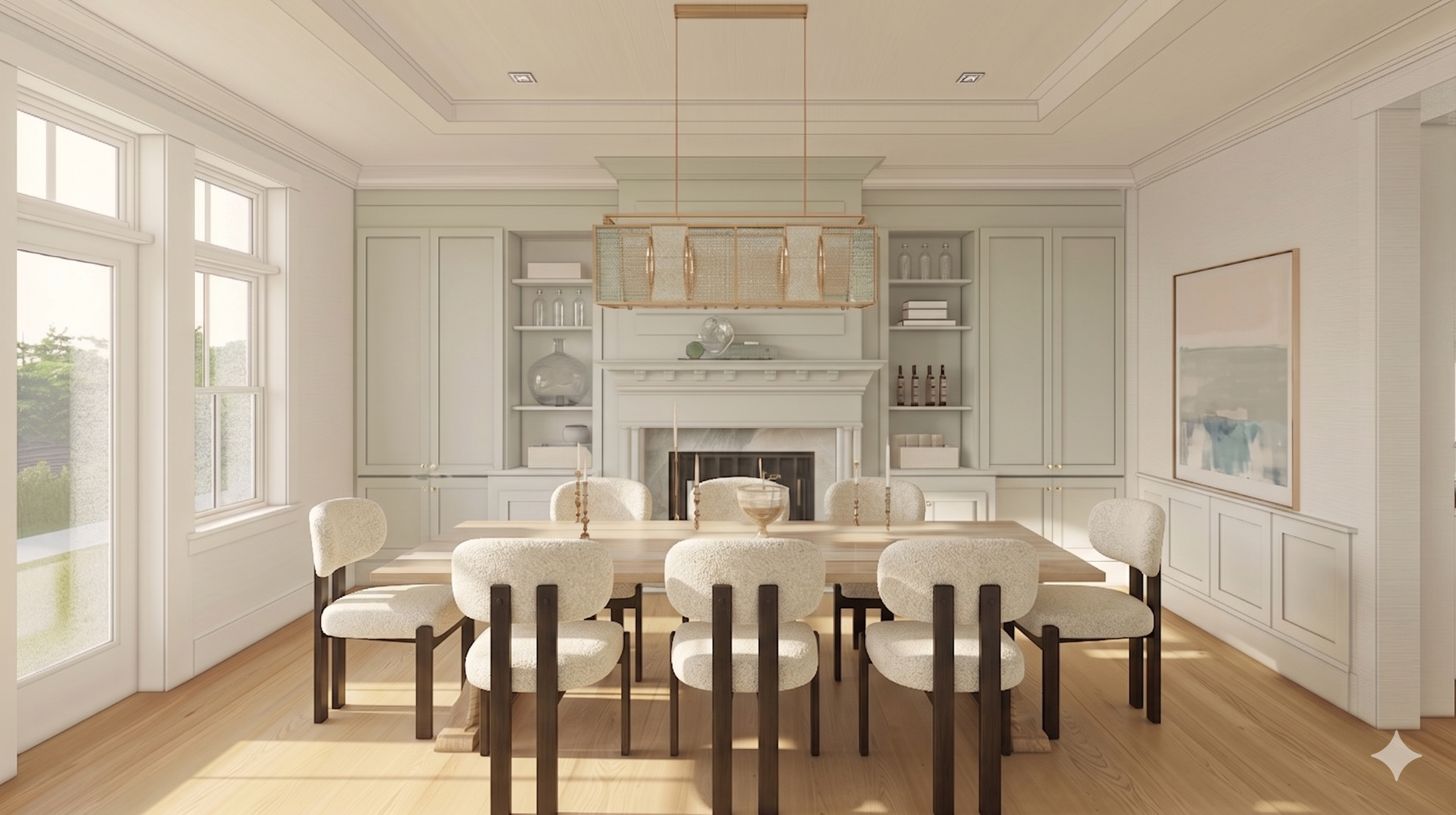
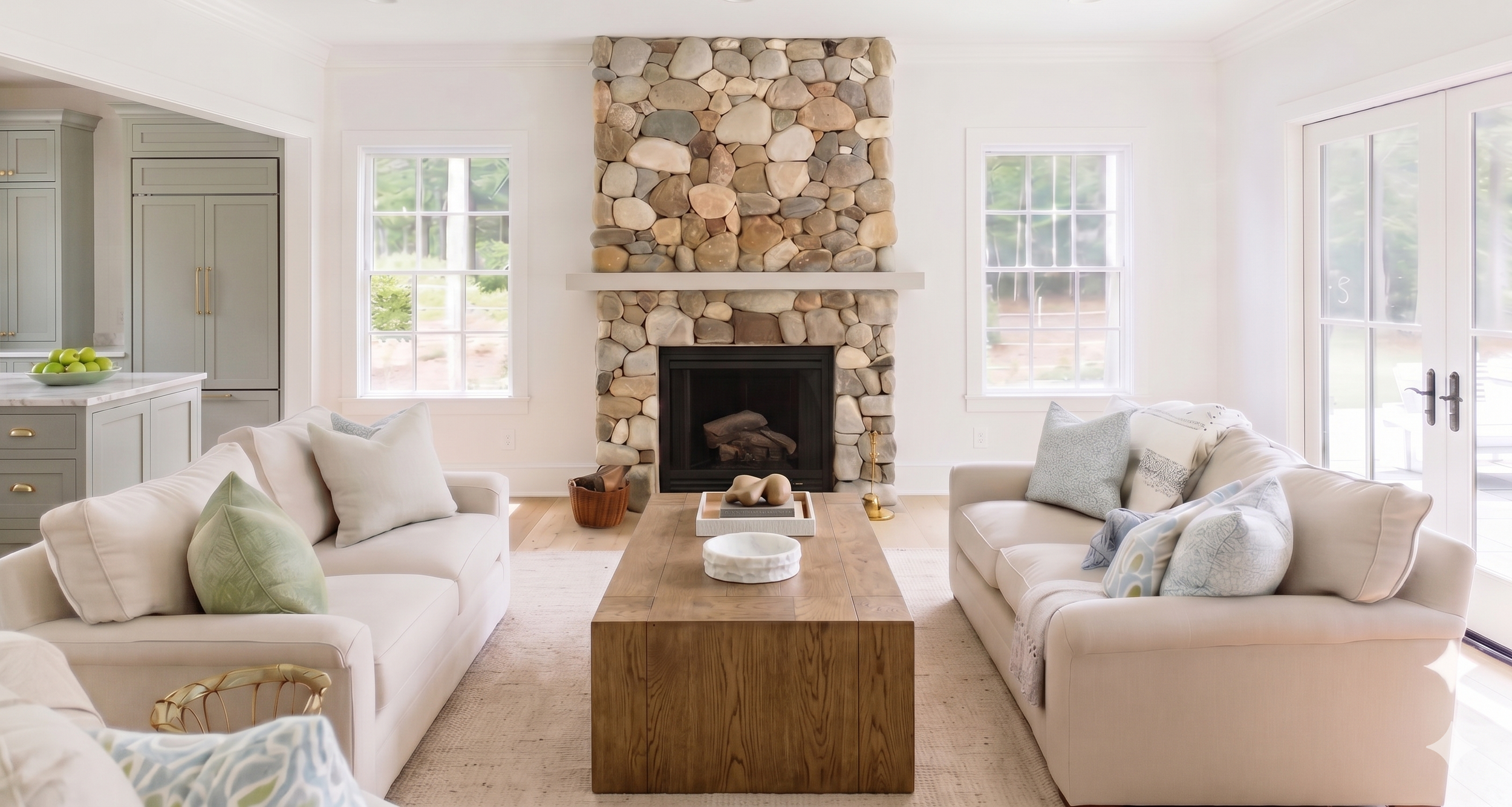
Salt Meadow introduced the brightest and airiest interpretation of the main level renovation. Pale neutrals, softened natural textures, and subtle blue-green accents created a fresher, more open feeling, especially where the expanded kitchen, breakfast area, and family room would connect.
This direction responded most directly to the homeowners’ desire for a lighter home, while still maintaining warmth, structure, and sophistication. It became the clearest expression of the preferred path forward.
Quiet Harvest
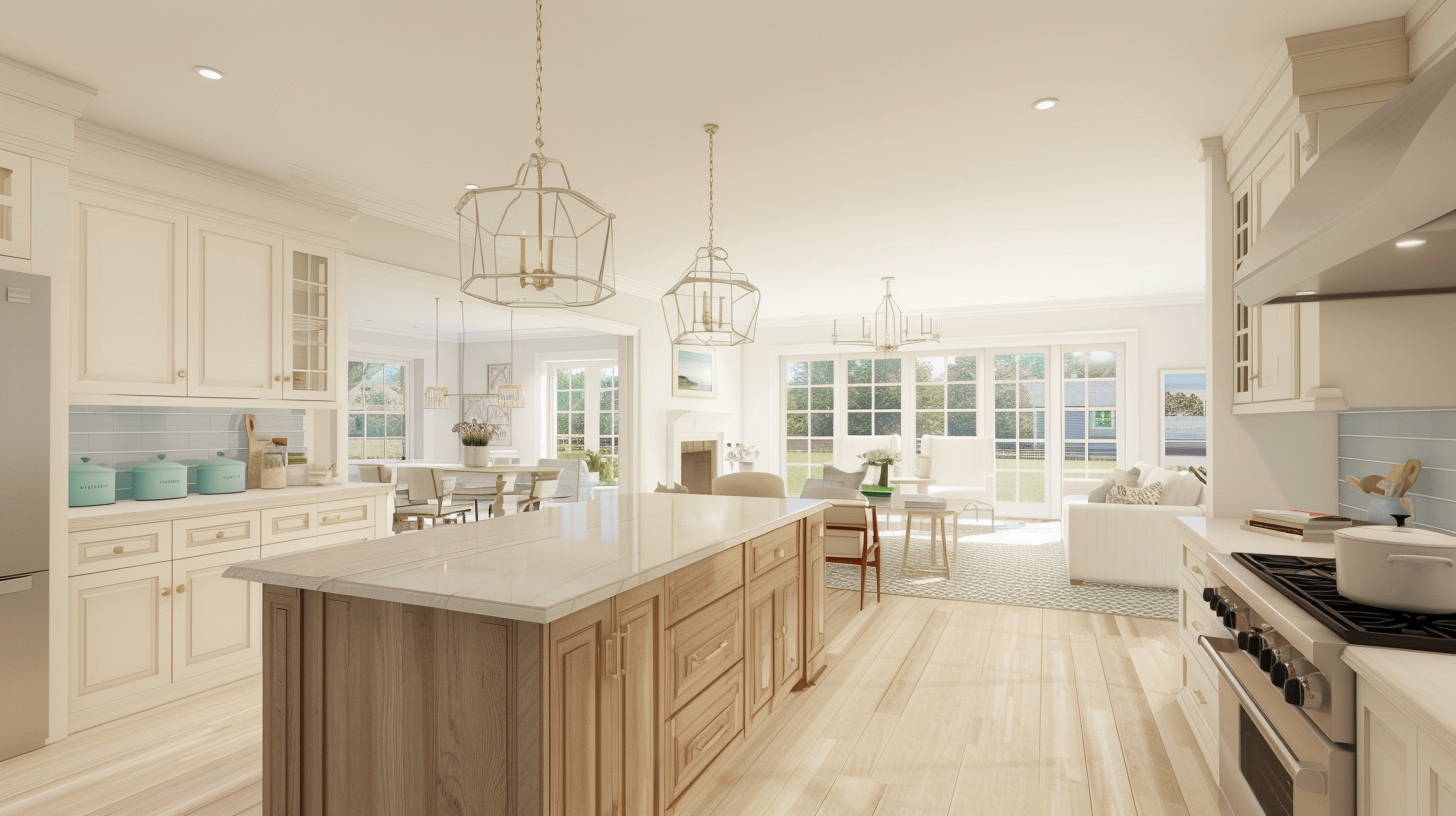
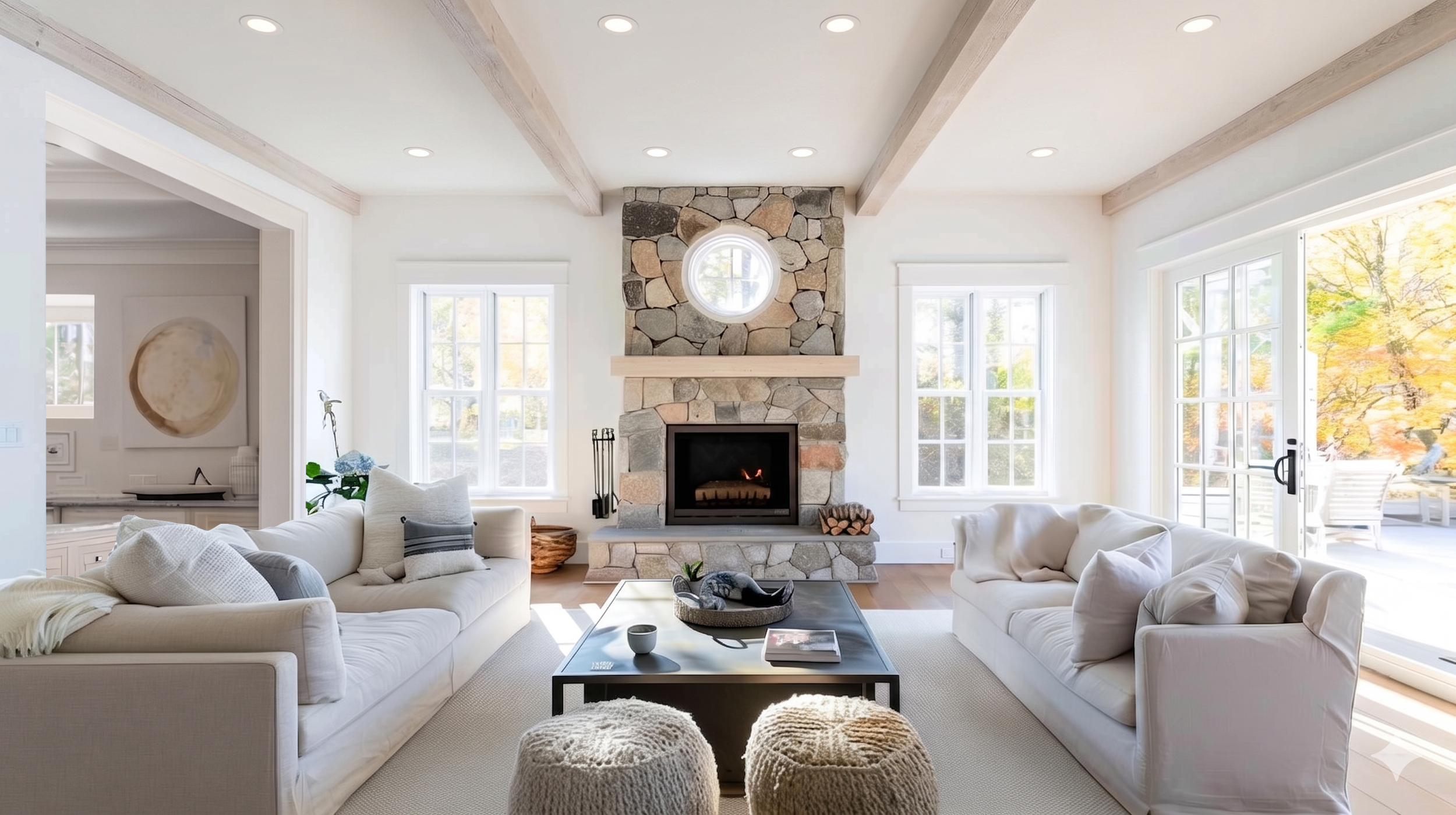
Quiet Harvest explored a warm, softly layered direction with creamy whites, muted greens, natural wood tones, and understated texture. This concept tested how the home could feel lighter and more current while still retaining a sense of comfort, warmth, and quiet traditional character.
Compared with Salt Meadow, Quiet Harvest felt slightly more grounded and intimate. It offered a calm, inviting interpretation of the renovation, with enough softness to feel welcoming without becoming overly decorated.
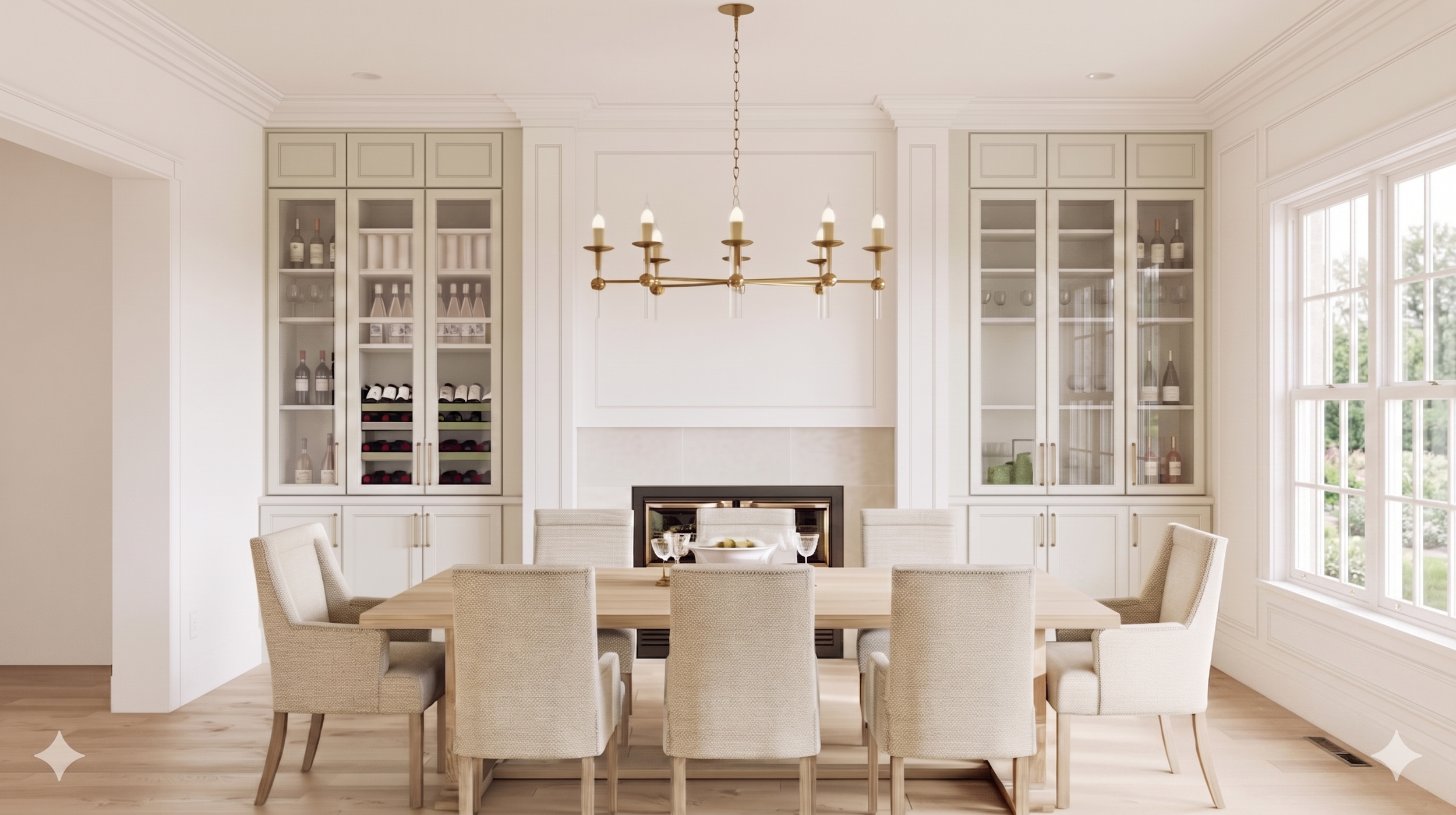
Tailored Fieldstone
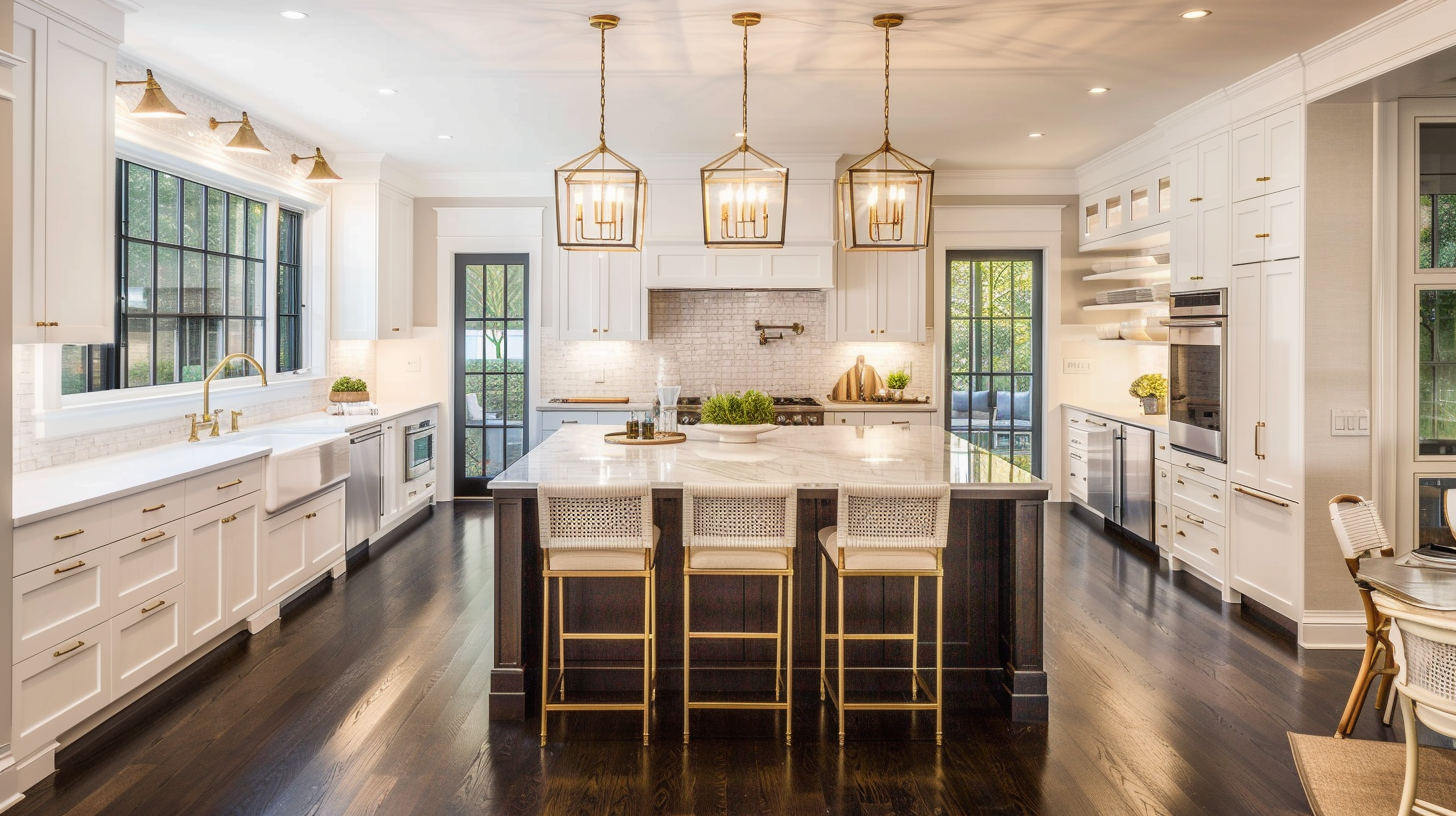
Tailored Fieldstone studied a more grounded and contrast-driven approach, with darker flooring, richer material weight, and a stronger architectural presence. This concept was useful because it tested the impact of keeping a deeper floor tone and working with a more substantial palette.
While this direction offered more drama, it also helped clarify that a heavier mood was less aligned with the homeowners’ preferred direction. As a comparison study, it played an important role in defining what the renovation should—and should not—become.